
The benefits of meditation for emotional wellbeing and intuition have grown more widely recognized in recent years, yet many people still struggle to sit quietly and quiet their thoughts. If you feel anxious or restless when trying to meditate—or you think meditation sounds boring—you are far from alone. Who wants to sit in silence doing nothing? Despite that resistance, meditation offers powerful rewards.
Meditation can calm the nervous system, encourage positive thinking, clear negative mental patterns, reduce stress, help manage anxiety, improve focus, cultivate compassion and kindness, and strengthen self-awareness and confidence. At its core, meditation is about mindfulness—an accessible practice that supports many areas of life.
Metaphysical tools such as astrology, numerology, and Tarot can complement meditation and other personal rituals. Many of these systems interrelate: crystals are often linked to astrological signs, Tarot cards correspond with zodiac archetypes, and certain crystals resonate with particular Tarot imagery. These connections create a harmonious relationship between tools that can enrich your meditation practice.
Tarot, in particular, is an effective aid for fostering calm, focused meditation. Using cards as prompts or focal points can guide reflection and connect you with your inner wisdom in a clear, approachable way.
The Basics of Tarot
Tarot decks, with their evocative illustrations, can feel mysterious to newcomers. Although Tarot has historical associations with the occult, its use is not limited to any single group or identity. Tarot is a versatile tool that anyone can use to explore questions, gain clarity, and access intuition.
Some readers use Tarot to receive messages from external sources such as spirit guides or higher powers, but many people use the cards primarily to access their own internal wisdom. When life gets noisy, Tarot can act as a bridge between conscious thought and gut feeling, helping you hear your inner voice more clearly.
Traditional Tarot decks contain 78 cards—22 Major Arcana and 56 Minor Arcana—but decks vary widely in style, artwork, and tone. Choosing a deck is a personal process: there are thousands of options, and the right deck is the one that resonates with you.
There are many ways to read Tarot, and most decks include a guidebook that explains card meanings and suggests spreads. The most important element in working with Tarot is connecting to your feelings and instincts. Over time, you’ll develop an intuitive sense of which cards to draw and how their messages apply to your life.
Using Tarot Cards in Meditation
If you are new to Tarot or meditation, combining the two can be an inviting way to establish a practice. Below are simple approaches to integrate Tarot into mindful routines and develop personalized rituals.
A gentle way to begin is by drawing one card each day. Some people hover their receiving hand over the deck until a card feels energetically distinct; others select a card at random. The goal is to create a personal connection with your deck and trust your instinctual choice.
After selecting a card, study its imagery and look up its core meanings if needed. Pay attention to the emotions, symbols, colors, and themes it evokes. Spend time meditating on the card’s message—sit quietly with it, listen to what arises, and allow insights to surface.
You can meditate in silence, use soft music, or engage in active reflection like journaling. Writing your thoughts about the card or creating a small piece of art inspired by it are also meaningful ways to deepen the experience. These practices cultivate focus and encourage mindful engagement with the card’s symbolism.
For beginners who find traditional meditation intimidating, Tarot-based meditation offers a structured, approachable entry point. It reduces the pressure to “empty the mind” and instead offers a theme to explore. Regularly using cards in this way also enhances familiarity with your deck and strengthens intuition, whether you are new to Tarot or have worked with it for years.
You can adapt the practice by using multiple decks or pulling several cards for a single session. Spending time with more than one deck, or exploring a multi-card spread, widens the range of prompts and perspectives you receive while maintaining the focus and calm that meditation provides.
Concluding Thoughts
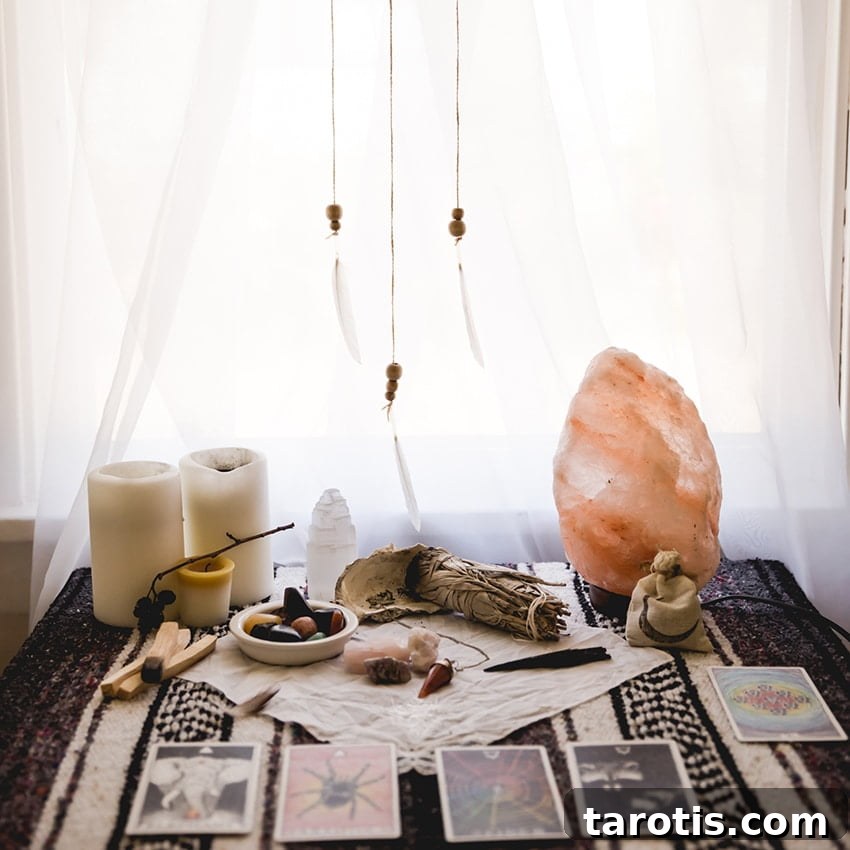
There are countless creative ways to incorporate Tarot into a mindful routine. You might add sensory elements such as incense, a smudged herb, gentle lighting, or a few supportive crystals to create a calming ritual environment. Small additions can make the practice feel more intentional and grounding.
Whatever form your Tarot-meditation takes, focusing on the imagery and message of a card often brings greater relaxation, clarity, and connection to yourself. Over time, this combined practice can enhance your awareness, nurture intuition, and support emotional balance.
Related Article: Astrology Answers’ Top 5 Tarot Spreads & How to Use Them