
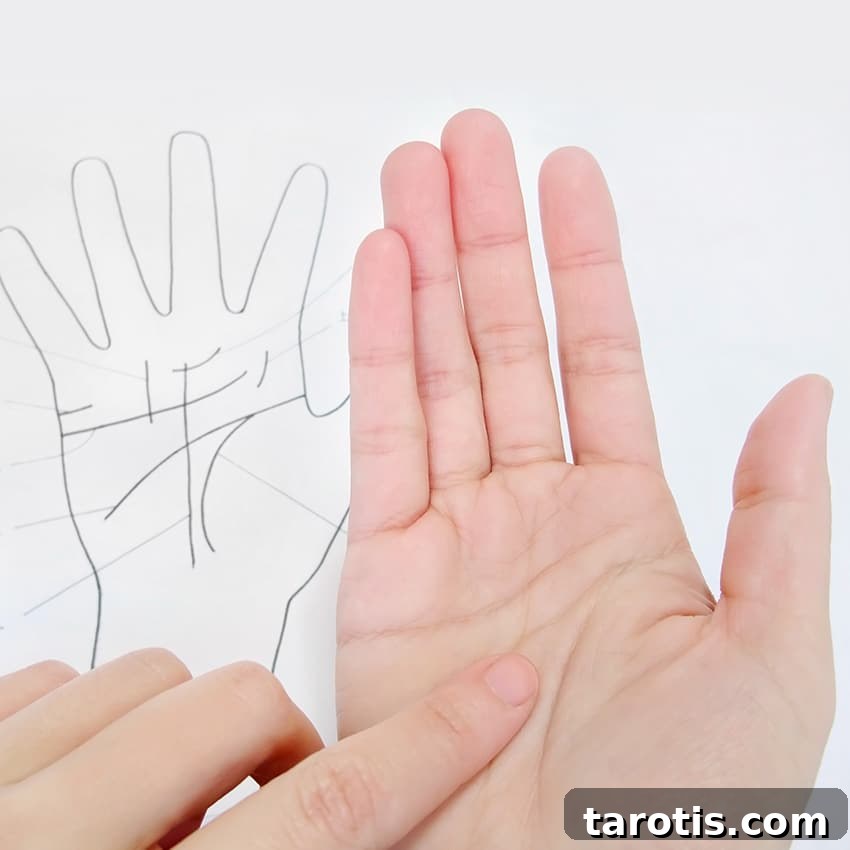
Life is beautiful, but it can also be full of confusion and challenges. Many people find comfort in consulting professional astrologers and palm readers to gain insight into their path, personality, and purpose. Yet reading your own palm can be an engaging way to tap into your inner wisdom and learn more about yourself—without spending money on a consultation.
Palmistry, like astrology, takes time and practice to master. You won’t become an expert overnight, but this clear, practical guide will teach you the basics so you can perform a simple at-home palm reading. Learn how to recognize hand types, interpret finger lengths, and read the major palm lines to reveal aspects of your temperament, strengths, and potential life patterns.
Let’s start with the four basic hand types.
Step 1: Find Your Hand Type
Palmistry often connects to astrology through the elements. There are four primary hand types, each associated with one of the classical elements: Fire, Earth, Water, and Air. Identifying your hand type gives you a foundation for interpreting your overall temperament and natural tendencies.
Fire Hands
Fire hands have an oblong or rectangular palm with fingers that are usually shorter than the palm. People with Fire hands are typically energetic, passionate, and driven. They are creative and require stimulation; boredom pushes them to seek new experiences. Warm and outgoing, Fire-hand people can also be impatient and impulsive.
Earth Hands
Earth hands are broad and square with a large palm and relatively short fingers. Those with Earth hands tend to be grounded, responsible, and practical. They are comfortable with routine and hard work, and they often feel a strong connection to nature. Stubbornness or resistance to change can be a common trait.
Water Hands
Water hands have a shorter palm and long, elegant fingers, often giving the hand an oblong shape. Water-hand individuals are usually sensitive, intuitive, and creative. They experience emotions deeply and are adept at sensing the feelings of others. Their rich imagination fuels artistic or idealistic pursuits, though they may sometimes overindulge emotionally.
Air Hands
An Air hand features a short, square palm with long fingers. People with Air hands are typically intellectual, communicative, and sociable. Quick thinkers with strong curiosity, they enjoy exchanging ideas and thrive in social environments. However, a busy mind can lead to anxiety or difficulty accessing deep emotions.
Step 2: Examine Your Finger Lengths
Finger proportions add nuance to your hand type and reveal personality traits related to thought patterns, decision-making, and openness.
- Long: Long fingers suggest attention to detail, a curious nature, and a more contemplative or refined energy.
- Short: Short fingers point to spontaneity and intuition; these people often act quickly and rely on instinct.
- Open: Fingers that naturally spread when the hand is relaxed indicate openness, unconventional thinking, and authenticity.
- Closed: Fingers held close together suggest caution about change and new ideas, and a preference for familiar routines.
Step 3: Read the Lines on Your Palm
Four major lines typically guide a palm reading: the Head line, Heart line, Life line, and Fate line. Readers often compare the dominant and non-dominant hands—the dominant hand tends to reflect current circumstances and actions, while the non-dominant hand can show potential or inherited traits.
The Head Line
The Head line relates to thinking style, learning, and judgment.
- Long & Straight: Indicates methodical thinking, careful planning, and sometimes a tendency to overthink or ruminate.
- Short: Suggests quick decision-making and practical action rather than extended deliberation.
- Split: A Head line that splits near the end often marks sensitivity and concern for other people’s thoughts and feelings.
- Long & Curved: Curving toward the lower palm suggests creativity, imagination, and inventive thinking.
- Crossed Over: Smaller intersecting lines can indicate significant decisions or periods of complex choice in life.
The Heart Line
The Heart line reflects emotional life, romantic tendencies, and how you express affection.
- Long & Straight: Parallel to the Life line, this shape points to a reserved, analytical approach to emotions.
- Short & Straight: Indicates a strong value on independence and personal freedom in relationships.
- Connected to the Life Line: A Heart line that joins the Life line can suggest greater emotional sensitivity and vulnerability to heartache.
- Split: A split Heart line often denotes someone who prioritizes others’ needs or feels pulled between different emotional commitments.
- Long & Curved: Reflects passion, expressive emotion, and creative enthusiasm in matters of the heart.
The Life Line
The Life line is tied to vitality, general life path, and personal resilience—not the literal length of life.
- Long & Curved: Suggests robust energy, physical stamina, and loyalty to loved ones.
- Long & Straight: Indicates a cautious, practical approach to life choices.
- Deep: A deeply etched Life line points to strong vigor and presence.
- Faint: A faint Life line may signal a need to rest more and cultivate steady, calm energy.
- Broken: Breaks in the line often mark times of significant challenge, trauma, or major life changes.
The Fate Line
The Fate line varies widely and may be absent in some hands. It often relates to career, life direction, and external influences on your path.
- Faint or Missing: A faint or absent Fate line can indicate flexibility and freedom to shift interests and projects over time.
- Long: A long Fate line points to a steady engagement with life pursuits and a consistent vocational focus.
- Deep: A pronounced Fate line suggests a strong sense of purpose or destiny related to your work or calling.
- Short: A Fate line that ends near the Head line may reflect a tendency to become bored or shift focus frequently.
- Joined: When the Fate line connects to the Life line, it often marks entrepreneurial drive and multiple simultaneous endeavors.
- Broken: Breaks in the Fate line hint at life shifts brought on by events outside your control—periods of transformation or redirection.
Interpreting Your Reading
After observing your hand type, finger lengths, and the major palm lines, take a moment to synthesize your findings. Write notes about recurring themes—your dominant traits, challenges, and strengths—and consider how the various elements of your palm reading reinforce one another.
Combine the general atmosphere of your hand type (Fire, Earth, Water, or Air) with the specifics of your fingers and lines. For example, a person with Water hands, long fingers, and a long curved Head line is likely highly imaginative and emotionally intuitive, while someone with Earth hands, short fingers, and a deep Life line may be practical, resilient, and steady.
Palmistry offers fascinating personal insights when used thoughtfully. Use this guide as a starting point to explore your tendencies and potentials, and revisit your observations as your life evolves.