As many of us begin to re-enter social settings and group experiences, it can feel unfamiliar—relearning in-person conversation, navigating crowds, and sensing the emotional atmospheres that others bring. For those who identify as highly sensitive persons (HSPs), empaths, or people who rely on intuition, these dynamics can be especially pronounced. You may find yourself responding to the emotions, desires, and unspoken energies people project, and sometimes those impressions can feel overwhelming.
Empaths and HSPs are often deeply attuned to the emotional states of others, sometimes experiencing emotions or even physical sensations in response to external energies. While this sensitivity is a gift, it can also create stress and blur boundaries between your feelings and those you absorb from others. Building routines that support separation, self-care, and recovery becomes essential so you can distinguish your own needs from the emotional climate around you.
Working intentionally with practices that cultivate introspection and grounding will help you manage emotional overflow and preserve your energy. Tools that encourage reflection—like journaling, meditation, or divination practices such as Tarot—can support clearer awareness of what is yours and what belongs to others. Even if you do not identify as an empath, exploring intuitive practices can strengthen your inner guidance and help you tune into your own priorities.
What Is an Empath?
Empaths are people who are especially sensitive to the thoughts, feelings, and energetic qualities of other people, animals, and environments. That sensitivity can sometimes manifest as physical sensations or strong emotional reactions. Because empaths often pick up on a wide range of impressions, it can be difficult to know which feelings originate from within and which come from outside sources.
That’s why establishing boundaries and rituals for self-care is important. Simple practices—regular rest, quiet reflection, grounding exercises, and conscious detachment—help empaths process what they sense without becoming overwhelmed. Recognizing that sensitivity as a strength rather than a flaw encourages healthier responses and a more sustainable way of engaging with others.
Tarot can be a useful tool for empaths and HSPs. When used intentionally, it offers a structured way to check in with yourself, identify needs and desires, and separate internal signals from external noise. The cards can help you reflect on your inner landscape and clarify how to prioritize your well-being.
Tarot for Empaths
The Tarot acts as a mirror for intuition. Shuffling and drawing cards invites reflection and helps your inner voice articulate feelings, concerns, and guidance. Interacting with archetypes and symbols can make subtle impressions more tangible, allowing you to notice patterns and receive insights you might otherwise miss.
When making decisions or exploring emotions, Tarot can help you weigh options and reveal the undercurrents shaping your experience. Pay attention to strong reactions to particular cards—these responses point to areas that need attention. Neutral or unclear reactions also carry meaning: they may indicate that more information is needed or that the right path has yet to reveal itself.
4-Card Tarot Spread to Unlock Your Inner Empath
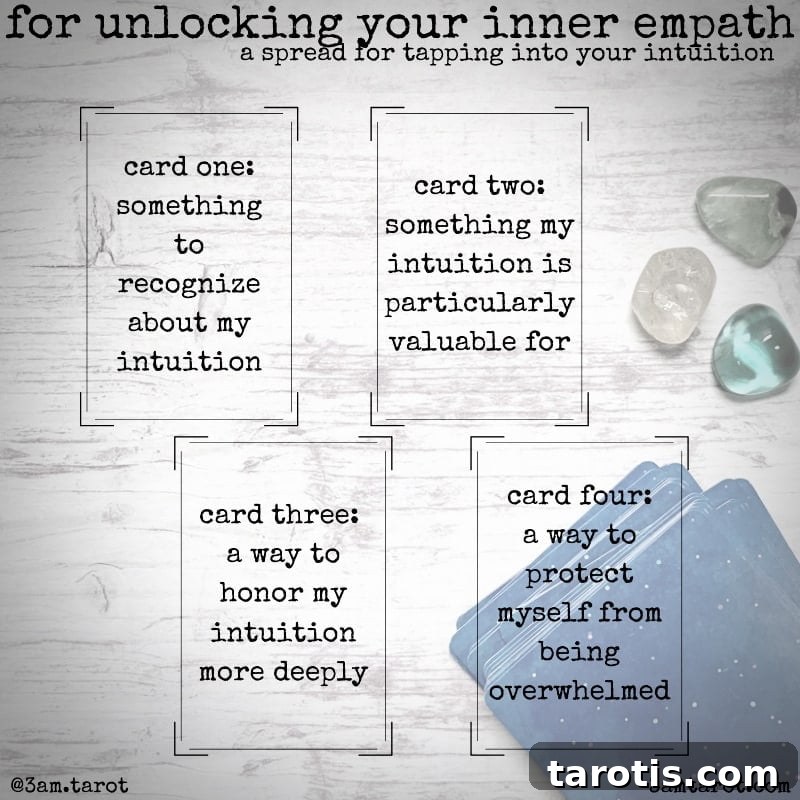
This four-card spread is designed to create a simple container for your intuition to surface. Approach the cards with openness and curiosity, honoring whatever arises without judgment. If a card evokes a strong reaction, use that response as a starting point for deeper exploration. If a card leaves you feeling neutral, consider whether more time or additional information is needed.
Developing your intuitive skills is an ongoing practice. Whether you’re new to intuitive work or already cultivate a regular practice, this spread can support self-inquiry and help you access empathic abilities that may be underused.
Below is an example reading to illustrate how the spread might be used in a personal ritual. The sample uses archetypal meanings to show how each position can reveal useful guidance.
Card One: Something to Recognize About My Intuition
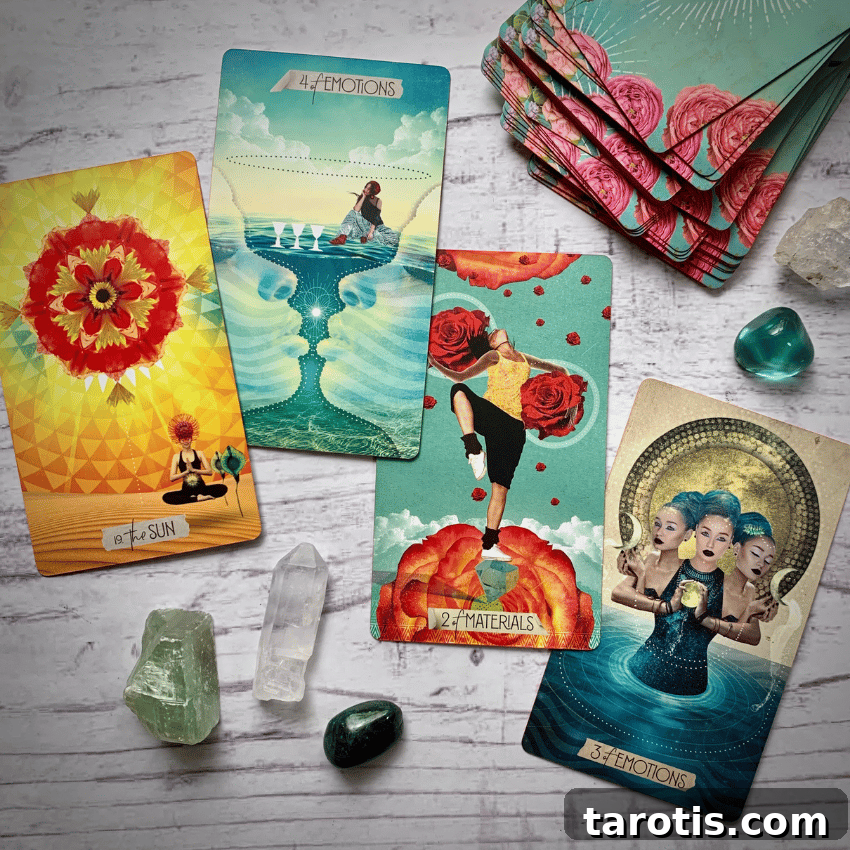
The Sun
The Sun represents clarity, authenticity, and joy. In this position it suggests that your intuition is a source of warmth and illumination—something to embrace rather than fear. The card encourages simplicity and honest appraisal, reminding you to see things as they are instead of imposing wishful interpretations. When intuition brings sudden clarity, it can reveal truths that help you move forward with confidence and authenticity.
Card Two: Something My Intuition Is Particularly Valuable For
4 of Emotions / Cups
The 4 of Cups often points to guardedness or withdrawal from emotional connection. Here it highlights intuition’s protective role: it helps you sense when to hold back, when to conserve emotional energy, and when boundaries are necessary. While the card can invite opening the heart, in this position it affirms that your instincts play an important role in keeping you safe—especially in situations that feel risky or emotionally draining.
Card Three: A Way to Honor My Intuition More Deeply
2 of Materials / Pentacles
The 2 of Pentacles speaks to balance and skillful juggling. In this placement it encourages integrating intuition with practical concerns—giving your instincts equal consideration alongside reason, responsibilities, and daily needs. Honoring intuition doesn’t mean abandoning logic; rather, it means including intuitive insight in the decision-making process so your choices reflect body, mind, and spirit in harmony.
Card Four: A Way to Protect Myself From Being Overwhelmed
3 of Emotions / Cups
The 3 of Cups symbolizes community, chosen family, and mutual support. This card advises leaning on trusted friends and loved ones when you feel overloaded. Sharing vulnerability with people who know and honor you can provide grounding and perspective. Connection with supportive others helps prevent isolation and replenishes emotional resources, making it easier to process empathic impressions without becoming overwhelmed.
Harness Your Inner Empath
Intuition is a valuable skill, whether you identify as highly sensitive or are simply learning to trust your inner voice. By practicing boundaries, self-care, and mindful reflection, you can respond to your intuitive impressions with clarity and purpose. Use rituals like this Tarot spread to check in regularly, differentiate your energy from others’, and make choices that reflect your true needs.
How do you honor your intuition? Do you identify as an empath or highly sensitive person, and how might a structured Tarot practice support how you listen to your inner voice?