
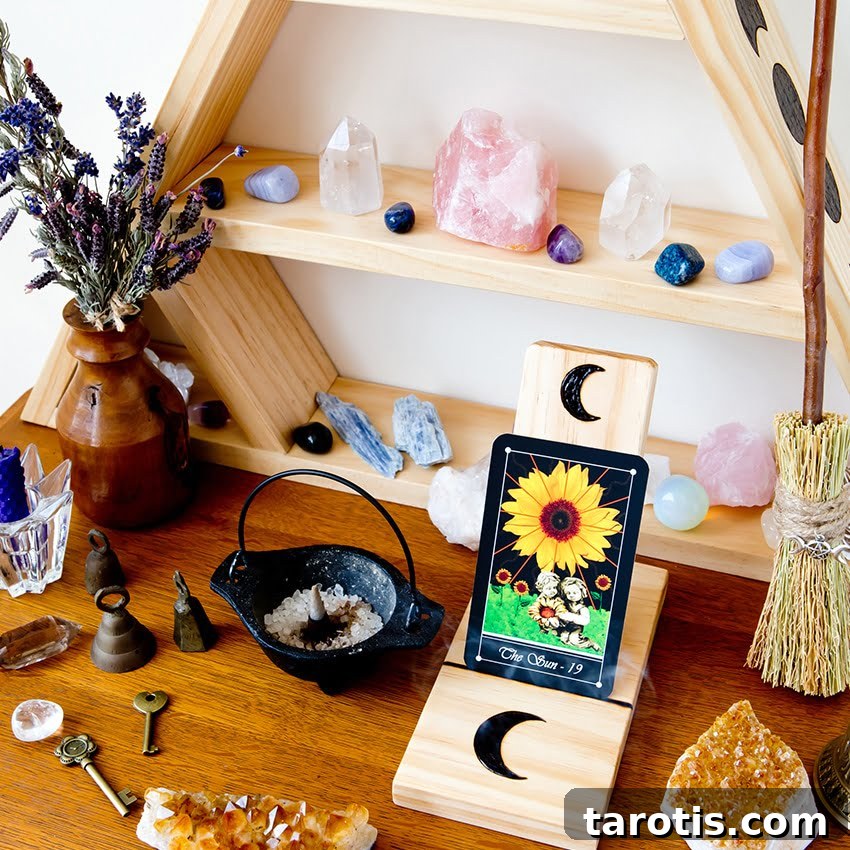
Have you ever heard someone mention their altar?
You don’t need to be religious to create an altar, and you don’t have to fully understand every tradition to benefit from one. This guide will inspire you to invite more positive energy into your home and life by building a spiritual altar and explain how to make one in a simple, meaningful way.
If you practice intentional living or mindfulness, an altar is a tool worth exploring. It can help shift your energy, focus your intentions, and attract positive experiences. Below we’ll explain what a spiritual altar is, how to create one, and ways to use it to deepen your practice and support a happier, more balanced life.
What is a Spiritual Altar?
An altar is a dedicated surface where meaningful items or “offerings” are arranged for spiritual, meditative, or personal development purposes.
Offerings can be any objects that matter to you—books, candles, incense, essential oils, plants, crystals, Tarot or oracle cards—anything that helps you tune into your intuition and inner strength.
Think of an altar as a mental and emotional anchor, a place that signals your mind to shift into a quieter, more reflective state. Altars appear in many cultures because they reliably support practices of reflection, healing, and intentional living. When you seek emotional relief, clarity, or guidance, the objects on your altar become cues that help summon the feelings and focus you want to cultivate.
An altar can be small or large; some people create several in different areas of the home, or even keep a compact one at work. Typically it’s a collection of sacred or comforting items placed on a table or shelf at a height where you can sit in front of it comfortably for meditation or contemplation.
Traditionally altars were used for offerings and blessings. You don’t need to pray to a specific deity or perform rituals—choose items that connect you to the states of mind, values, or energy you want to invite into your life, and arrange them in a way that feels right to you.
How To Make an Altar
There is no wrong way to create an altar.
Begin by clarifying what you want to bring into your life—an emotion, a quality, an experience, or a physical change. Maybe you want a place to find balance, deepen your spiritual connection, or simply remind yourself of your values.
Select objects that uplift you and foster a sense of hope, peace, or love. When placed together with intention, these items form an energetic hub that supports your inner life.
If you aren’t sure where to start, look inward. Close your eyes, breathe deeply, and notice what items or images come to mind. You might recall a meaningful place in nature and bring a found object, choose a photograph of someone who inspires you, or place a book that guides your practice. Altars are personal, and what resonates with you may differ from what resonates with others.
Here are some common altar items you might consider, selected for the ways they often support focus and well-being:
- Plants or flowers—bring life, calm, and a connection to nature.
- Scented items—candles, incense, or essential oils can deepen meditation and create a soothing atmosphere.
- Crystals—many people use crystals to raise the energetic tone of a space or to support grounding, protection, or clarity. Choose stones you feel drawn to.
- Personal jewelry or mala beads—placing these on the altar when not worn can help “charge” them with your intention and presence.
- Oracle or Tarot cards—displaying a deck or a single card can serve as a reminder to consult your inner guidance and stay aligned with your practice.
How Do You Use an Altar?
Using an altar is simple, but it becomes most effective when you develop a consistent practice. The key is to set a clear, focused intention each time you sit with it.
You might set one overarching intention for the altar or change the intention depending on what you need. The altar functions as an anchor for your thoughts; returning to it regularly trains your mind to focus and align with your goals.
For example, if you’re healing after a relationship, you can use the altar to redirect love-energy toward yourself and towards positive actions—volunteering, creative projects, or nurturing friendships. Writing your intention or goal on a slip of paper and placing it on the altar helps make that aim visible and tangible. Many people also light a candle to mark the moment of commitment and signal the start of focused practice.
You can design an altar to support a specific chakra by including relevant colors, symbols, herbs, affirmations, or artwork. Altars are also effective for cultivating intuition, connecting with spirit guides, or practicing spiritual skills like mediumship. Whatever your aim, sit before your altar regularly—daily if possible—and use the space to ask for guidance, invite healing, and listen inwardly. Over time, this steady attention helps you access clarity and inner strength.
What Are You Waiting For?
Now that you know the basics, the most rewarding part is experiencing the effect of an altar firsthand. Intentional practice can transform how you feel, strengthen your capacity to create positive emotions, and open new channels of awareness.
You don’t need to buy anything to get started—look around your home for items that already symbolize who you are or who you want to become. Place a poem, a photograph, a small object from nature, or something that reminds you of your highest aspirations on your altar. Keep it simple, meaningful, and authentic. The purpose is to calm the mind and connect with your inner wisdom—an accessible practice that supports growth, peace, and resilience.