
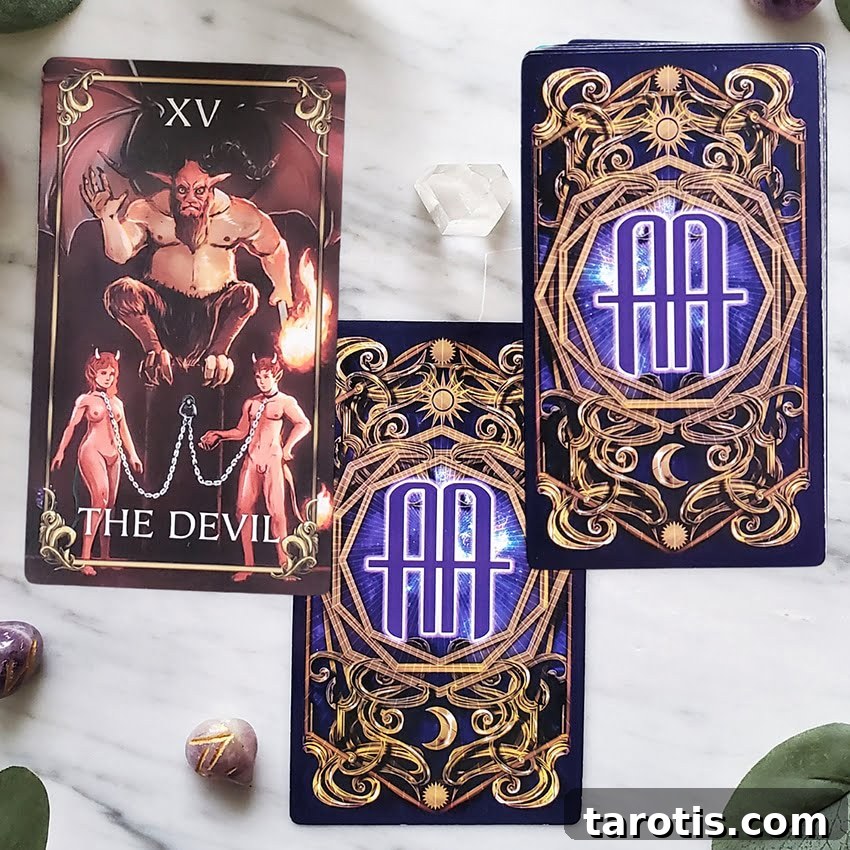
The Devil card often provokes a strong reaction when it appears in a reading. In many traditional Tarot decks, a horned figure presides over a naked man and woman who are chained together, creating a tense image that can feel ominous.
But is the Devil card entirely negative?
No Tarot card is purely “good” or “bad.” Cards reflect energies and lessons, and the Devil is no exception. It frequently highlights the shadow side of life: addictions, compulsions, unhealthy attachments, forbidden desires, and conflicts between urge and conscience. Yet it can also point to the potential for awareness, transformation, and recovery when its message is acknowledged and addressed.
The Devil & The Lovers
The Devil is the 15th card of the Major Arcana. When you reduce 15 (1 + 5), it equals 6, the number of The Lovers card, which reveals an important link between them. The Lovers shows two people naked beneath an angel’s light, symbolizing idealized love, union, and innocent desire. The Devil, meanwhile, presents a darker twist: the same naked figures are chained and controlled, watched by a smug, dominating figure.
In readings, the Devil can be thought of as “The Lovers gone wrong.” Where The Lovers suggest harmony and choice aligned with values, the Devil points to bondage, obsession, and choices dominated by base impulses rather than conscious love.
The Devil & Astrology
The Devil card embodies the darker side of human nature—what we repress, hide, or feel ashamed of. Two zodiac signs are often associated with its energy: Scorpio and Capricorn.
Scorpio relates to the Devil through themes of transformation, shadow work, and confronting destructive impulses. Scorpionic energy can turn darkness into insight by facing it directly.
Capricorn connects to the Devil via material ambition and the tension between soul needs and worldly desires. When Capricorn leans negative, it can become consumed with status, money, and power, prioritizing ego-driven goals over inner life.
What Does the Devil Mean in Love & Relationships?
In relationship readings, the Devil tends to signal intense, often problematic dynamics. If it appears in the feelings position, it can indicate strong sexual attraction or fixation. This can be flattering, but it often carries complications: the attraction may be forbidden, obsessive, or directed toward someone who is unavailable.
In committed relationships the Devil can point to a passionate sex life, possibly with elements of kink or power play—but it can also reveal feelings of being trapped, manipulation, or toxic patterns. The card frequently warns that lust, control, jealousy, or dependency have distorted love into something unhealthy. Intensity can be exhilarating at first but can rapidly become destructive if left unchecked.
What Does the Devil Mean in a Career Reading?
In career contexts, the Devil often highlights an overpowering focus on material success—money, possessions, prestige—that may overshadow your spiritual or emotional needs. It can indicate ambition, charm, and the determination to get ahead, but it also warns against letting ambition become an obsession that erodes values or wellbeing.
When used constructively, Devil energy gives drive, charisma, and strategic savvy. When unexamined, it can lead to ethical compromise, workaholism, or a life unbalanced by material pursuit.
What About the Devil as an Obstacle?
The Devil symbolizes temptation in many forms: a persuasive voice urging “one more” drink, a flashy purchase you don’t really need, or the magnetic stranger who threatens commitments. It represents the tug-of-war between base impulses and higher principles. Everyone encounters the Devil’s influence—resisting short-term gratification for long-term wellbeing is part of human life.
This card often appears when you face temptations that test integrity, willpower, or commitment. Recognizing the pattern gives you power to choose differently.
What About the Devil in Reverse?
Reversed, the Devil is usually a hopeful sign. It suggests breaking free from chains—escaping addictions, leaving toxic relationships, shifting destructive thought patterns, or letting go of limiting attachments. The reversed Devil invites you to confront fear and reclaim autonomy, signaling recovery, liberation, and clearer alignment with your higher self.
How to Make the Devil Card Work for You
Context is essential when interpreting the Devil. Surrounding cards and your personal situation determine whether the card points to a warning, a lesson, or an opportunity for change. The Devil’s energy can be harnessed positively if approached with awareness.
1. Use Positive Affirmations
If the card highlights bondage or unhealthy habit, affirmations can support change. Simple declarations like “I release what no longer serves me” or “I choose freedom over compulsion” can reinforce new patterns.
2. Meditate on the Card
Sitting quietly with the image of the Devil and noting thoughts, feelings, or images that arise can deepen insight. Journal any impressions and consider what specific attachments or fears the card is illuminating.
3. Place the Card on an Altar or a Visible Spot
Keeping the Devil in a meaningful place—on an altar, or somewhere visible after ritually cleansing it—can remind you to work with its lessons. Rather than letting the card control you, use it as a tool for awareness and transformation.
Conclusion
The Devil carries an important message: integrating our shadow is necessary to become whole. Running from what we fear only strengthens its hold; giving in uncritically surrenders our power. By facing and understanding our darker impulses, we can transform them into insight and strength.
When we meet the Devil as an equal—curious, discerning, and resolute—we reclaim control. Shadow work doesn’t erase desire, but it does teach us how to manage it consciously so it no longer rules our lives.