
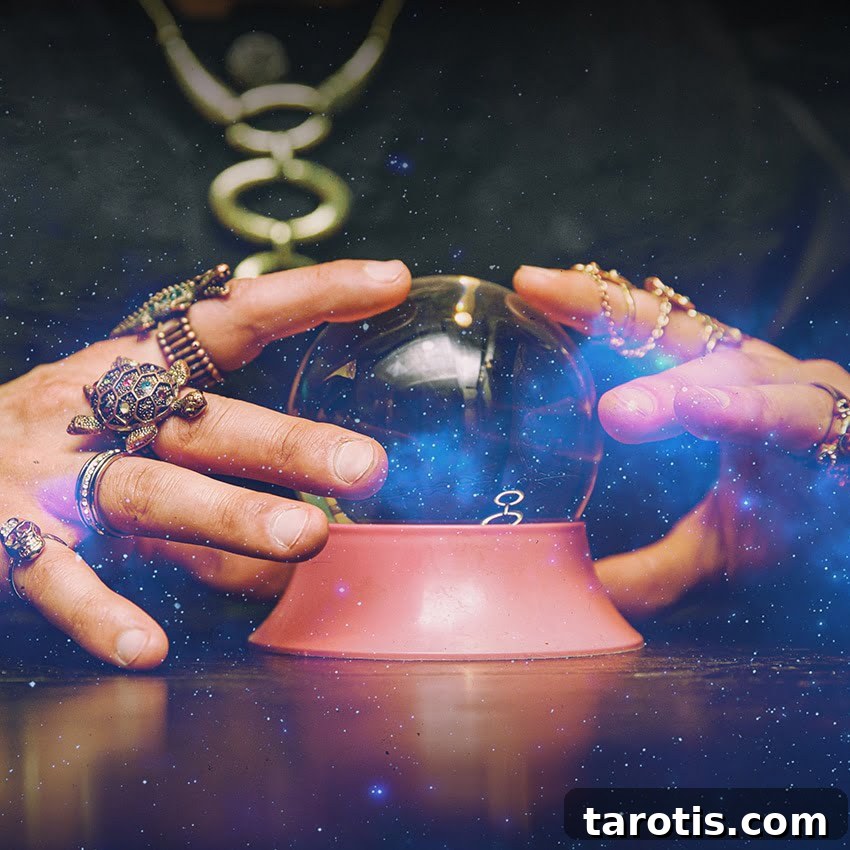
What comes to mind when you picture an astrologer?
Do you imagine someone gazing into a crystal ball, surrounded by tapestries and candles?
That image may apply to a few practitioners, but many other popular impressions of astrologers are simply inaccurate. Astrologers are not inherently fortune tellers, wizards, or magicians—though some may explore related practices in their personal lives.
An astrologer’s reputation matters to them, and unfortunately it is often mixed up with misleading or disrespectful stereotypes.
Understanding what astrologers actually do helps clear up misconceptions and lets you respond confidently when someone dismisses astrology without knowing the facts.
If you’ve ever wondered who an astrologer really is, read on—we’ll debunk four common myths about astrologers.
4 Myths About Astrologers That Need to Be Dispelled
There are many misconceptions about astrology and its practitioners, but the following four myths are among the most common. Let’s examine each to gain a clearer picture of the field.
Astrology Myth #1: Astrologers Use Crystal Balls
When people think of metaphysical practitioners they often picture a crystal ball. Scrying, or crystal gazing, does use crystal balls, but this practice is distinct from astrology. While an astrologer might use scrying tools privately, a crystal ball is not central to astrological work.
Astrology relies on charts that map the positions of planets, stars, and constellations at specific moments in time. These charts function as a kind of “map” of the sky, offering insight into cycles, tendencies, and energies—not mystical visions from a crystal sphere.
Astrology Myth #2: Astrologers Have Psychic Powers
Another frequent assumption is that astrologers possess psychic abilities like mind reading or precognition. Although some astrologers may also have psychic gifts, those abilities are not inherent to astrology itself.
Astrologers use calculated planetary positions to interpret likely themes and timing in a person’s life. Because planetary movement can be predicted, astrologers can discuss upcoming influences, but that is different from claiming supernatural knowledge of specific future events. Astrology is interpretive and symbolic, not identical to extrasensory prediction.
Astrology Myth #3: Astrologers Can Tell You Who Your Soul Mate Is
Many clients ask astrologers about soul mates or lottery numbers. Astrology can indicate periods that are favorable for relationships or financial activity, but it cannot point to a specific person as your destined partner or guarantee winning numbers.
Astrology helps show where you are in your personal development and what kinds of connections are likely to be supportive. It can highlight timing and compatibility patterns, but meeting a partner depends on many personal and situational factors—and on timing that reflects your own readiness.

Astrology Myth #4: Astrologers Are Looking to Scam You
It’s understandable that skeptics sometimes dismiss astrology as superstition, but the idea that astrologers are primarily trying to scam people is unfair and harmful. Historically, astrology and astronomy were linked as ways to understand sky phenomena, and astrology has been practiced for centuries as a system of symbolic meaning.
Most professional astrologers are motivated by a genuine interest in celestial patterns and their psychological or spiritual implications. Their aim is usually to help others gain clarity about life cycles, choices, and inner dynamics—not to deceive or exploit clients.
Four Myths Busted
If you study or follow astrology, you’ve likely encountered these misconceptions and know how damaging they can be to the community. Learning about planetary cycles and symbolic correlations can deepen insight into relationships, timing, and personal growth.
When you hear inaccurate claims about astrology, take time to research and consider reputable perspectives. Misunderstanding often breeds criticism, but a careful look shows astrology as a complex tradition that blends observation, symbolism, and interpretation.
The astrological community values compassion, curiosity, and a desire to understand universal patterns. If you’re drawn to this path, you’ll find people interested in spiritual development, metaphysics, and thoughtful reflection on how the sky’s cycles mirror life on Earth.
Are you excited to explore this community further?