
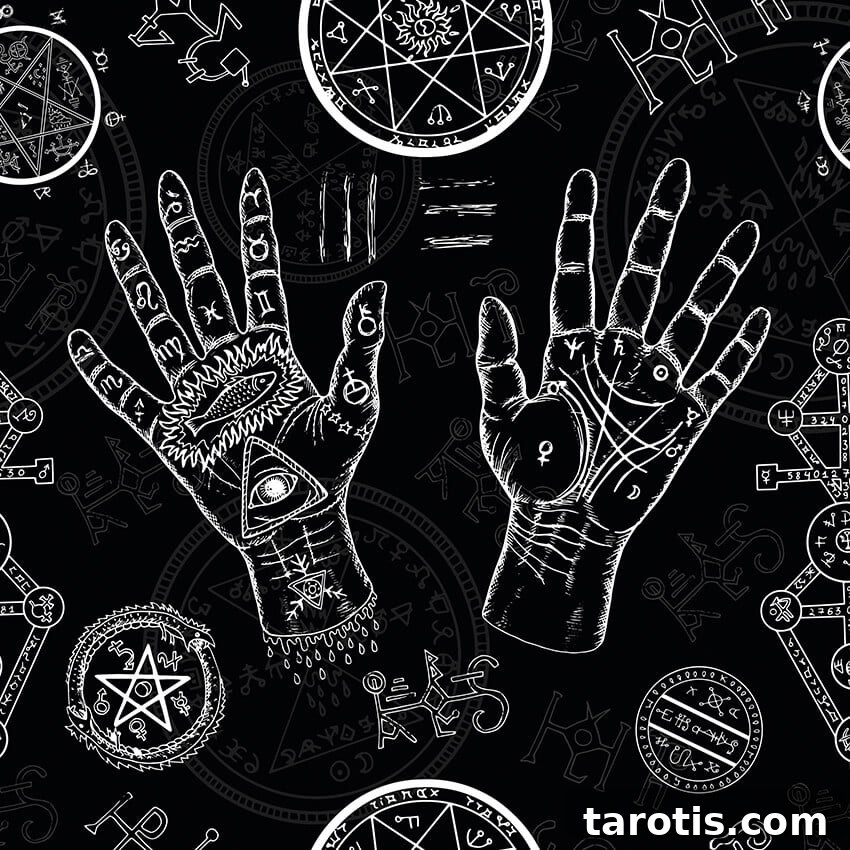
One of the most exciting aspects of metaphysical study is discovering new gateways to insight. At some point, every practitioner was new to astrology, Tarot, crystals, or another divinatory practice. Exploring fresh methods expands our understanding and deepens self-exploration.
That said, it’s easy to settle into familiar routines. When we stop learning new modalities, we limit the avenues available for personal growth. Fortunately, the internet makes it simpler than ever to research different ways to examine our spiritual and emotional lives.
I found myself in this exact situation when a friend asked if I had ever had my palm read. Admitting I hadn’t, I realized I knew very little about palmistry. I’d grown comfortable with my usual methods and hadn’t ventured into other practices for years. My curiosity led me to research palmistry and its role in metaphysical study.
The History of Palmistry
Palmistry, also known as chiromancy (from the Greek for “hand divination”), studies the lines, mounts, and other features of the hand. Evidence of palmistry exists in art and texts from as early as 400 BC across multiple cultures. Traces of chiromancy have been found in India, China, and Romania before the practice spread to Europe, where it gained significant popularity.
Because palmistry developed independently around the world, there are many systems and regional approaches. Some traditions focus on character traits and personality assessment, while others include predictive elements. Throughout history, many societies and individuals have taken palmistry seriously—Aristotle is said to have introduced palmistry to Alexander the Great, for example—and the practice has held varying degrees of credibility and institutional support over time.
How Does Palmistry Work?
Palmistry encompasses a range of techniques, but most systems emphasize two primary areas of the dominant hand: the lines and the mounts. The dominant hand is typically used for readings that consider present tendencies and potential future developments, as it is viewed as an expression of conscious will and life direction. The non-dominant hand is often associated with inherited traits, subconscious patterns, and the past, making it useful for self-understanding and healing.
The Lines
Three main lines form the foundation of many palm readings: the heart line, the head line, and the life line. Although only three lines might sound limited, each line contains many nuances that a practiced palmist examines. Factors such as length and depth, whether a line is continuous or broken, its texture and curvature, and how the lines interact all contribute to a detailed interpretation.
For example, a deep, unbroken heart line may be read differently than one with breaks or subtle chains, and interplay between the head and life lines can suggest the relationship between intellect and vitality. Experienced readers observe these subtleties to form a richer picture of temperament, emotional patterns, and potential life themes.
The Mounts
Mounts are the padded fleshy areas of the palm that correspond to different planets and mythic figures in many classical systems. Common mount names include Jupiter, Saturn, Apollo, Mercury, Mars (positive and negative), the plane of Mars, Luna (the Moon), Neptune, and Venus. Each mount correlates with specific traits—Venus relates to love and sensuality, while Mercury is connected to communication and intellect.
A palmist assesses the prominence, texture, color, and flexibility of each mount. A well-developed mount might indicate strength in the associated qualities, whereas a flat or underdeveloped mount could suggest areas of lesser emphasis or potential growth. Palmar skin patterns and tissue density also contribute important details in a reading.
Some readers incorporate additional hand features—fingers, knuckles, nail shape, and finger length ratios—into their interpretations, but most of the core information in traditional palmistry comes from the palm itself. If you’re beginning to study the practice, focusing on the lines and mounts of the dominant hand provides a solid foundation.
There are many resources available—books, articles, and instructional videos—that can introduce you to palmistry’s basics. You might also consider having a reading with an experienced palmist to see how the lines and mounts are interpreted in practice. A firsthand session can clarify how subtle details are read and how they relate to your life themes.
The Answers Are in Your Hands
Palmistry is a practical, accessible tool that complements other metaphysical methods for self-discovery. It’s relatively straightforward to practice at home, but accurate interpretation requires study and experience. If you begin exploring palmistry, take time to consult several reliable sources and practice carefully before offering readings to others. With patience and attentive observation, palmistry can become a meaningful addition to your personal toolkit for growth and insight.