
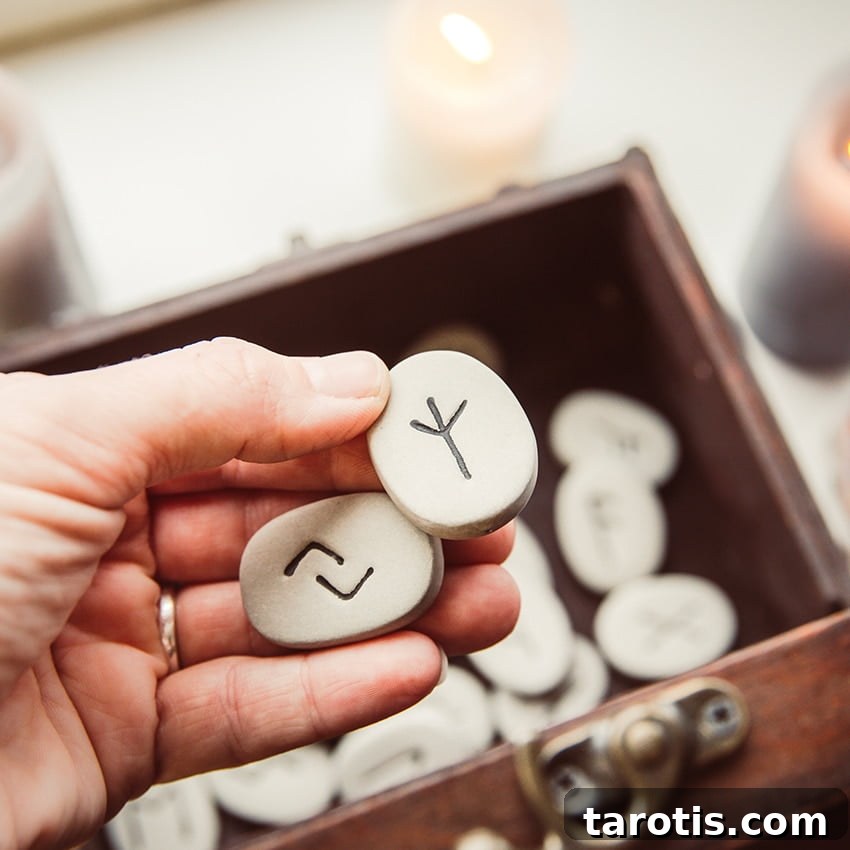
The Runic alphabet, known as futhark, is an ancient writing system shrouded in mystery. Believed to have originated around the 3rd century, it was used across Germanic regions including Britain, continental Europe and Scandinavia. Compared with the span of human language, runes are a relatively recent development, yet they carry deep cultural and spiritual significance.
Most early runic inscriptions are found on runestones — carved slabs often placed near graves dating from roughly 950 to 1100 AD. To date, around fifty runestones have been documented, with the majority discovered in Sweden and others found in Norway, Denmark and Greenland.
In Norse myth, the origin of the runes is closely tied to Odin, the god of wisdom, divination, magic, poetry and death. According to legend, Odin pierced his own heart with his spear and hung himself from Yggdrasil, the world tree, for nine nights to learn the meaning of the runes. The Well of Urd, sometimes called the Well of Fate, supplied the knowledge that shaped the Runic alphabet, which was revered as a source of spiritual insight and hidden wisdom.
Because of this mythic origin, runes are often used today as metaphysical tools. Traditionally carved into wood or bone, individual runes are cast or read in a practice called runecasting. This method is valued for accessing subconscious wisdom and for revealing insights that lie beneath conscious awareness.
Futharks
The word futhark comes from the first six letters of the Elder Futhark — F, U, Th, A, R, K — the oldest runic system identified. The Elder Futhark appears on artifacts such as the Kylver Stone from Gotland, Sweden, and dates to around 400 AD.
During the Viking Age (circa 793–1066 AD), a simplified version called the Younger Futhark emerged. It contains just 16 runes, a reduction reflecting evolving Germanic languages. The Younger Futhark exists in two regional forms: the long-branch variety associated with Danish origins and the short-twig form linked to Swedish and Norwegian traditions.
Modern rune sets typically draw from the Elder Futhark, which remains the most commonly used set for divination and study.
How to Read the Runes
Runecasting offers a practical and contemplative way to explore the subconscious and connect with spiritual guidance. Learning the runes can seem daunting, but understanding each symbol’s core meaning makes reading them accessible. Below is a concise guide to the Elder Futhark runes and their general interpretations.
Elder Futhark
 Fehu
Fehu
 Fehu
FehuFehu is traditionally associated with wealth and abundance. This rune often points to the potential for gain — not only financially but in terms of resources, energy and creative power. It emphasizes your capacity to generate prosperity, often requiring effort and intent.
Uruz
 Uruz
UruzUruz signifies primal strength and untamed power. In a reading it may indicate opportunities or forces beyond your direct control that bring vitality or decisive change. It advises you to harness raw energy wisely.
Thurisaz
 Thurisaz
Thurisaz acts as a protective warning. It represents the power to resist or avoid conflict and suggests possible encounters with opposition or tests. It can also signal the need for caution and strategic response.
Ansuz
 Ansuz
AnsuzAnsuz relates to communication, inspiration and divine order. This rune often heralds revelation, guidance or new ideas. It can indicate incoming opportunities through clarity, messages or spiritual insight.
Raidho
 Raidho
Raidho symbolizes journey and right movement. It points to progress toward goals and the need for purposeful, disciplined action. This rune invites you to align your intentions and take a steady path forward.
Kenaz
 Kenaz
KenazKenaz stands for knowledge, revelation and skill. It represents learning, teaching and the unveiling of inner wisdom. When present, it encourages clarity of thought and practical creativity.
Gebo
 Gebo
GeboGebo is the rune of gifts, partnership and reciprocity. It emphasizes balanced exchange in relationships and the importance of generosity and mutual support.
Wunjo
 Wunjo
WunjoWunjo represents joy, harmony and well-being. It encourages staying grounded during chaos and signals potential for positive news or emotional balance.
Hagalaz
 Hagalaz
Hagalaz symbolizes disruption and transformation. Like hail that melts into life-giving water, it points to trials that ultimately yield lessons and growth.
Naudhiz
 Naudhiz
Naudhiz concerns necessity, restraint and inner need. It highlights pressures that call for patience, re-evaluation and breaking limiting patterns to meet your goals.
Isaz
 Isaz
IsazIsaz (Ice) denotes stasis and delay. It suggests a situation temporarily frozen, advising patience until conditions change and progress becomes possible.
Jera
 Jera
JeraJera represents cycles, harvest and the rewards of steady effort. It encourages trusting natural timing and acknowledging that outcomes often follow seasons of work.
Eihwaz
 Eihwaz
Eihwaz is linked to manifestation, resilience and transition. It reminds you that endings frequently open new doors and asks for awareness of emerging opportunities.
Perthro
 Perthro
Perthro represents mystery, chance and the unknown. It highlights unpredictability and the role of risk in life, suggesting openness to possibilities beyond your control.
Algiz
 Algiz
AlgizAlgiz (Elhaz) is a rune of protection, boundaries and spiritual defense. It supports personal resilience and is commonly used in talismans and charms to invite safety and well-being.
 Sowilo
Sowilo embodies the sun’s clarity and guidance. It brings illumination to confusing matters and signals clarity, success and renewed strength.
Tiwaz
 Tiwaz
TiwazTiwaz stands for justice, duty and rightful victory. It can indicate success through principled action, especially in disputes or challenges that require integrity.
Berkana
 Berkana
Berkana is associated with birth, renewal and growth. It often points to new beginnings — relationships, projects or personal transformation — and the nurturing required for them to flourish.
Ehwaz
 Ehwaz
EhwazEhwaz emphasizes partnership, movement and trust in natural order. It calls for cooperation and balance to advance shared goals and achieve success.
Mannaz
 Mannaz
Mannaz represents humanity, the self and interpersonal awareness. It encourages compassion, self-knowledge and consideration in relationships and community.
Laguz
 Laguz
LaguzLaguz connects to water, intuition and emotional flow. It advises adaptability, trusting instincts and allowing life to move more fluidly in times of change.
Inguz
 Inguz
InguzInguz signals readiness to act, particularly in relationships and creative projects. It encourages confidence, initiative and the fertile potential of new beginnings.
Dagaz
 Dagaz
DagazDagaz represents transformation through balance of opposites — day and night, light and dark. It suggests breakthrough, protection and the emergence of positive change.
Odal
 Odal
OdalOdal (Othala) concerns heritage, home and nonmaterial wealth — family, community, and creative legacy. It encourages gratitude for the intangible blessings that shape a meaningful life.
Why Use Runes?
Runecasting is a practical meditative practice that helps you explore inner landscapes and gain perspective. It encourages presence, focused intention and self-reflection while offering symbolic guidance for life’s questions.
Anyone can learn runecasting. With a simple set of runes and consistent practice, you can develop a personal connection to the symbols and use them as tools for insight, decision-making and spiritual exploration.