
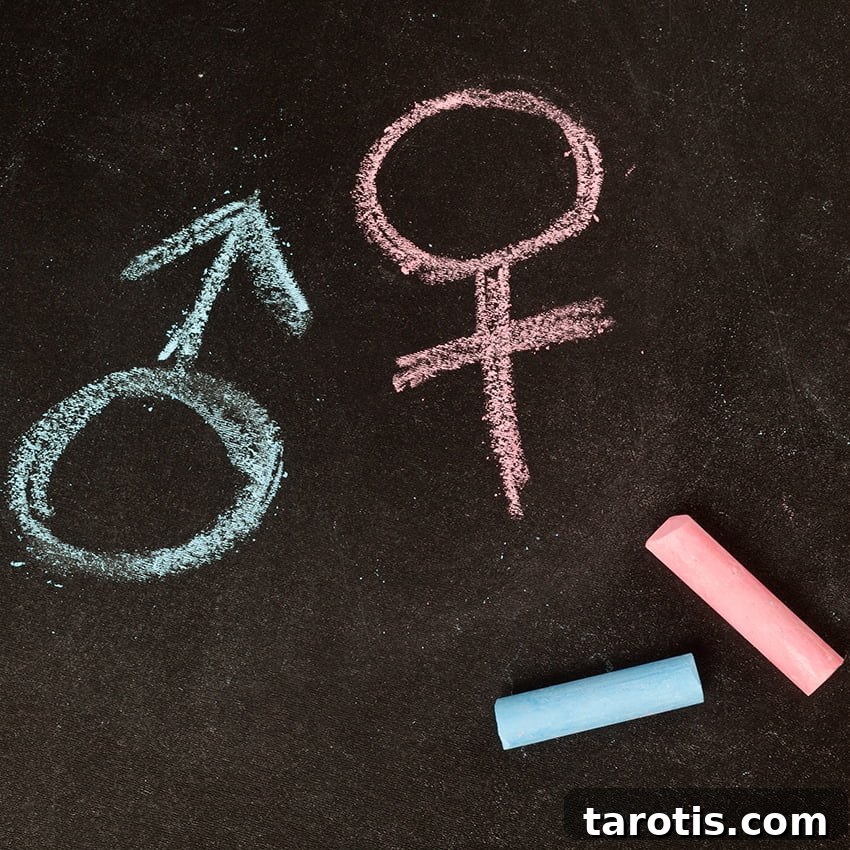
Understanding masculine and feminine energies in astrology clarifies how planets influence us and deepens our understanding of other people. Recognizing which signs are introverted (feminine) and which are extroverted (masculine) makes reading a birth chart and interpreting daily planetary shifts far more intuitive.
The zodiac signs traditionally considered masculine are:
- Aries
- Gemini
- Leo
- Libra
- Sagittarius
- Aquarius
The remaining six signs are generally considered feminine:
- Taurus
- Cancer
- Virgo
- Scorpio
- Capricorn
- Pisces
Planets can also be categorized by polarity. The traditionally masculine planets include:
- The Sun
- Mars
- Jupiter
- Saturn
The traditionally feminine planets include:
- The Moon
- Venus
- Neptune
- Pluto
Mercury and Uranus are generally considered neutral.
It’s important to note that these distinctions aren’t about biological sex. Astrology uses the yin and yang framework: yang (masculine) represents active, giving energy, while yin (feminine) represents receptive, inward energy. Alongside elements, qualities (cardinal, fixed, mutable), houses and other categories, polarity is a key tool for interpreting a chart and understanding behavior.
The Masculine & Feminine in Your Core Personality
Your Sun sign expresses core personality and life approach. A masculine Sun sign often inclines a person toward taking direct action, making decisions logically, and stepping forward in group situations. Someone with a feminine Sun sign may be more receptive, intuitive, and likely to allow opportunities to unfold rather than force them.
Masculine Sun signs tend to show as more extroverted and assertive, while feminine Sun signs often manifest as quieter, more observant, and home-oriented. These tendencies shape how someone approaches problems, pursues goals, and interacts in social settings. Still, the Sun is only one part of a chart; the full personality reflects the balance of many placements.
Masculine & Feminine Moon Signs & Your Hidden Emotional Needs
The Moon governs emotional needs and how we feel secure. A masculine Moon sign generally seeks independence, activity, and the company of others to feel emotionally balanced. A feminine Moon sign tends to require emotional attunement, reflection, and deeper emotional connection to recharge.
Mixed polarities in Sun and Moon reveal complexity: an outgoing masculine Sun combined with a feminine Moon might need frequent, meaningful conversations to feel grounded. Conversely, a feminine Sun with a masculine Moon might appear emotionally warm but rely on action or work to soothe inner tension.
How This Affects Us Each Month
As the Sun transits each sign monthly, the prevailing polarity colors collective energy. When the Sun is in a masculine sign, activity and initiative are supported; when in a feminine sign, rest, reflection, and receptivity are emphasized. Similarly, the polarity of other transiting planets affects specific life areas depending on the planet’s role and how long it remains in a sign.
For example, when Venus moves from an air sign into a water sign, desires for closeness and emotional blending may grow. If Mars shifts from a fire sign to an earth sign, assertive social energy may slow into steadier, home-focused drive. Observing these shifts helps anticipate changes in motivation, relationship needs, and priorities.
Masculine/Feminine & Yin/Yang
The yin/yang polarity also appears in other systems, such as the Chinese Zodiac. Each Chinese zodiac year is categorized as yin or yang, influencing the overall tone of that year—yang years encourage outward action and new beginnings, while yin years favor introspection and inner work. Similarly, in numerology and tarot, even numbers often carry feminine energy and odd numbers masculine energy.
Yin (Feminine) Chinese Zodiac Animals:
- Rat
- Tiger
- Monkey
- Horse
- Dragon
- Dog
Yang (Masculine) Chinese Zodiac Animals:
- Ox
- Rabbit
- Sheep
- Rooster
- Snake
- Pig
Outer-planet transits through masculine or feminine signs also influence broader social and generational themes. For instance, Jupiter in a feminine sign may bring easier opportunities and a sense of receiving, while Jupiter in a masculine sign might require proactive effort to realize gains. Noting these patterns helps explain why some years feel geared toward planting seeds and others toward harvesting results.
The Masculine & Feminine in Your Daily Life
The Moon’s frequent sign changes make it the most noticeable daily influencer. Checking the Moon’s sign gives insight into why moods and energy fluctuate from day to day. A Moon in an active masculine sign can push us to accomplish tasks, while a Moon in a feminine sign encourages slowing down, savoring comforts, and tending inner needs.
Combining knowledge of sign traits, elements, and polarities enhances practical forecasting and daily self-awareness.
Closing Thoughts…
These polarities rarely appear in absolute form because a birth chart is made up of many planetary placements and aspects. A chart with predominantly masculine placements will lean toward yang energy; a chart with many feminine placements will lean toward yin. People who feel androgynous often have a relatively balanced mix of both polarities.
Relationships often work through balance: we may feel comfortable with others who mirror our polarity, or we may be drawn to those who offer complementary qualities that balance and expand us. Understanding each person’s masculine and feminine balance can clarify dynamics in friendships, romantic partnerships, and work relationships, and can illuminate why “opposites attract” or why certain pairs feel like natural complements.
Assessing how much yin and yang each person brings helps reveal the practical dynamics of compatibility and collaboration, making astrology a useful tool for understanding both ourselves and our connections with others.
Related Article: Kings & Queens: The Masculine & Feminine in Tarot