
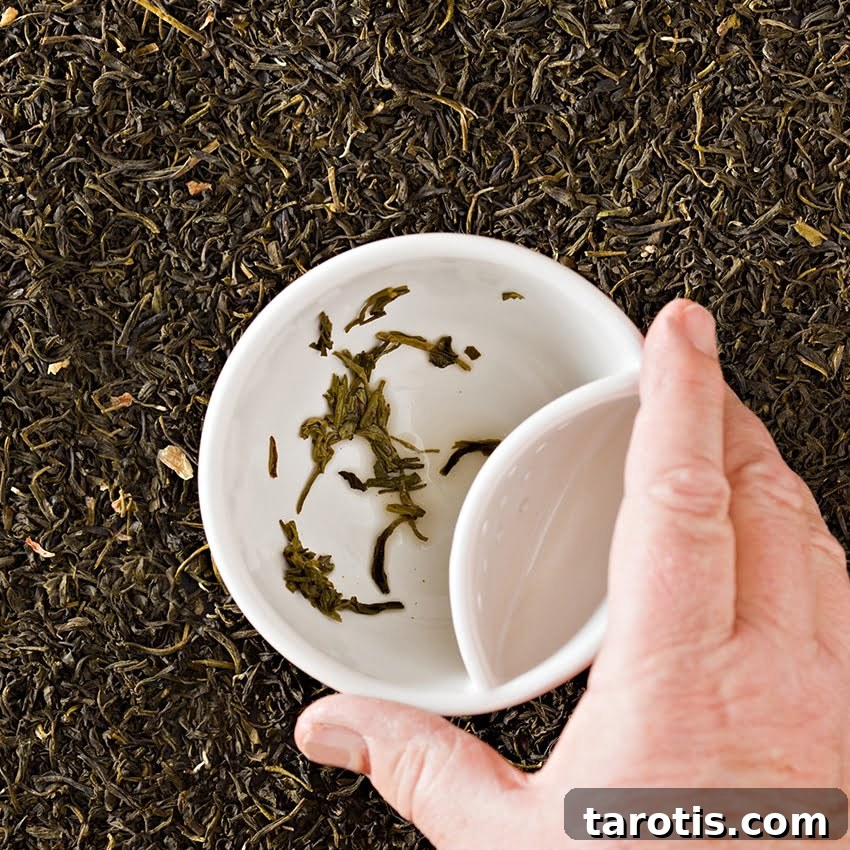
If you’ve ever wanted to explore divination without Tarot cards, crystal balls, or astrology charts, consider tasseography — the art of reading tea leaves. All you need is the tea you already have in your cabinet.
Despite its simple appearance, tasseography can be a meaningful, ritualistic practice. With a few basic supplies and some attention, you can turn an ordinary cup of tea into a focused divination session.
Gather your favorite teacup, brew some loose leaf tea, and use the guidance below to begin interpreting the symbols left behind in the cup.
What is Tasseography?
Also called tasseology or tasseomancy, tasseography is the practice of reading tea leaves. After drinking a cup of tea, the remaining leaves form shapes and patterns that readers interpret to gain insight into questions about the past, present, or future.
Like other symbolic divination methods such as scrying or dream interpretation, tea leaf reading relies on the reader’s intuition and knowledge of symbols. Unlike systems with fixed sets of symbols — for example, a 78-card Tarot deck — tasseography offers virtually infinite images, so interpretation is flexible and intuitive.
If you enjoy working with abstract symbols and letting meaning emerge organically, you may find tasseography particularly appealing.
How to Read Tea Leaves
Getting Started With Tasseography
There are many ways to practice tasseography, and most readers develop their own rituals over time. At minimum you will need:
- A teacup (a traditional teacup and saucer work best; the cup’s shape helps the leaves settle and form useful patterns)
- Loose leaf tea
Optional preparations include lighting a candle or incense, dimming lights, or taking a brief moment to meditate. These steps can help create a calm, focused space for the reading.
A common method to try:
- Brew loose leaf tea and pour it into your teacup. Drink most of the tea, leaving roughly a half teaspoon to a teaspoon of liquid and leaves at the bottom.
- As you brew or while you drink, focus on a question or topic. If you prefer a general reading, try asking, “What do I need to hear right now?”
- Swirl the cup gently three times with your non-dominant hand to encourage the leaves to move and form shapes.
- Carefully turn the cup upside down onto the saucer so the remaining liquid drains away and the leaves cling to the interior of the cup.
- When you turn the cup back upright, position the handle so it is facing you; this orientation helps with placing meaning and direction in your reading.
With the cup upright and the leaves settled, begin to observe and interpret the shapes and symbols you see.
Common Tea Leaf Shapes & Meanings
The core of tasseography is interpreting the images formed by the leaves. While meanings are flexible and personal, here are common motifs and their typical associations to help you get started:
- Numbers — Numbers can indicate timing or point to numerological significance. If timing was your question, a visible number may provide a clear clue.
- Animals — Animal shapes carry symbolic meanings (strength, loyalty, intuition, etc.). Consider the animal’s traditional symbolism or what that creature personally represents to you.
- Flowers — Different flowers suggest different messages; for instance, a rose commonly relates to love or emotional matters, while other blossoms may indicate growth, remembrance, or beauty.
- Shapes — Simple geometric shapes can be meaningful: a heart often indicates love or affection; a circle can suggest a cycle, completion, or unity; a square may imply stability or boundaries.
Ultimately, you are the best interpreter of your reading. Your personal associations and intuitive impressions matter most—tasseography is meant to deliver messages tailored to you.
Will You Try Tasseography?
Tasseography can feel either delightfully simple or richly complex, depending on how deeply you choose to engage with it. The physical tools required are minimal, but the interpretive possibilities are broad.
If you’re new to the practice, relax and allow your confidence to grow with time and practice. The more you work with tea leaves, the more attuned you’ll become to the symbols and meanings that appear.
Whether you treat it as a lighthearted pastime or a serious spiritual practice, tea leaf reading can offer insight, perspective, and a gentle ritual for reflection.