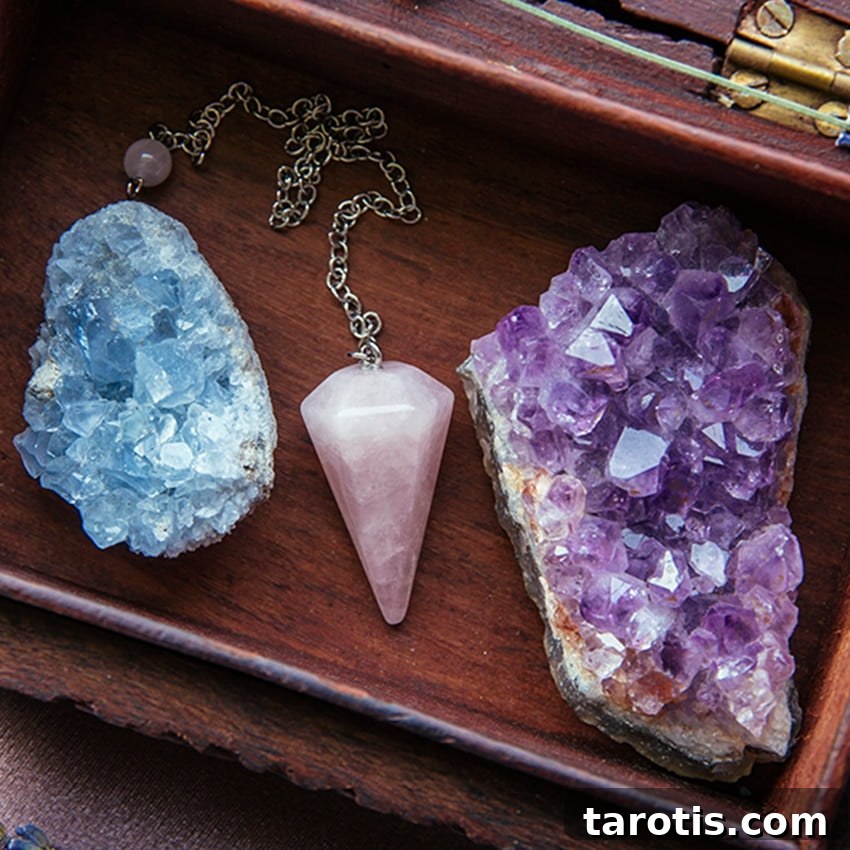
Tarot has become widely popular, but it’s only one of many divination systems. If you’ve mainly worked with Tarot or astrology, exploring other methods can reveal fresh perspectives and deepen your intuitive practice.
Many divination systems carry an air of mystery, even those that have become household names. Whether you’re curious about alternatives or feel ready to expand beyond familiar tools, looking into different systems can be illuminating. Divination exists to offer multiple pathways to insight, and trying new approaches is part of that journey.
Below are five powerful but often underrated divination methods worth exploring.
5 Underrated & Powerful Divination Systems
1. Scrying
Scrying is one of the most accessible divination methods. It relies on connecting with your inner vision and interpreting images, symbols, or impressions that arise in the mind’s eye. While popular culture often shows psychics gazing into a crystal ball, a crystal is only one of many possible tools. Any reflective surface—a mirror, a bowl of water, oil, or even smoke—can serve as a focal point.
The practice involves quieting the mind, focusing on a question, and observing what appears. Like Tarot, scrying demands intuitive interpretation rather than fixed definitions. The images you receive are personal and symbolic, so trusting your impressions and allowing time for clarity is essential.
2. Tasseography

Tasseography, commonly called tea leaf reading, uses the shapes formed by loose tea leaves to convey messages. The ritual is simple: brew loose-leaf tea, focus on a question, and drink until only the leaves remain. Some readers add small gestures—rotating or tapping the cup—but the core is observation and interpretation.
Once the leaves settle, read the patterns, shapes, and clusters. You might see animals, letters, numbers, or abstract forms that suggest meanings. As with scrying, tasseography is an intuitive art: symbols are interpreted in context and through your personal associations. If you enjoy interactive, tactile practices and love tea, tasseography can be both enjoyable and revealing.
3. Runes
Runes are carved symbols—often on stones or tiles—with distinct meanings associated with each sign. Unlike a 78-card Tarot deck, a typical rune set contains about 24 symbols. Readings involve drawing one or more runes to answer a question or explore a situation.
Each rune carries an archetypal meaning and can be interpreted alone or in combination. You can perform simple single-stone readings for quick insight or draw several runes for a more detailed reading. Used for centuries across cultures, runes offer a compact yet deep symbolic system that’s well suited for those who prefer tactile, elemental tools.
4. Pendulums
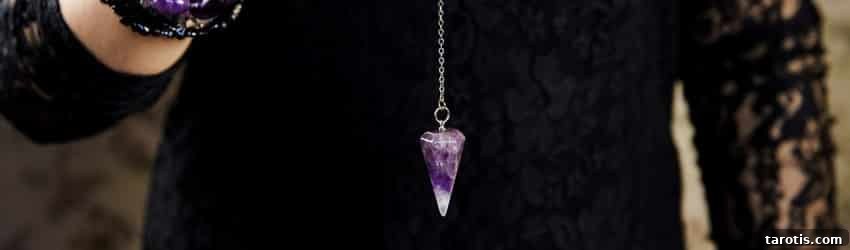
Pendulum divination is ideal for straightforward yes/no questions when you want a quick answer. A pendulum can be any weighted object suspended on a cord or chain. Before asking questions, calibrate your pendulum by identifying its responses for “yes,” “no,” and “uncertain.” A simple way is to ask the pendulum to indicate your name or another known fact and note the direction of swing.
Once calibrated, pose clear, specific yes/no questions and observe the pendulum’s movement. Because it is fast and easy to use, a pendulum is a practical tool for everyday decisions or to complement lengthier readings when immediate clarity is needed.
5. Lenormand Cards
Lenormand is a card-based system similar to Tarot but typically more concrete and focused on specific outcomes. While Tarot often explores underlying causes, archetypes, and guidance, Lenormand tends to emphasize direct, situational answers—what is happening or likely to happen.
Lenormand decks use a smaller set of simple, concrete symbols, and readings often involve combinations of cards whose meanings interact. This makes Lenormand especially useful for fortune-telling or precise, practical guidance. Card readers who enjoy Tarot may find Lenormand a rewarding complement, expanding their repertoire with a system geared toward clarity and specificity.
Which Divination System Will You Choose?
These five methods represent just a portion of the many divinatory systems available. Some have become mainstream, while others remain lesser known or historically obscured. Exploring different systems allows you to discover which resonate most with your intuition and needs.
Learning a new divination practice takes patience and practice. Experimentation, reflection, and consistent use will reveal which tools best support your questions and style. Whether you’re seeking symbolic depth, direct answers, or tactile rituals, there’s a divination system suited to your path—so don’t hesitate to try something new.