
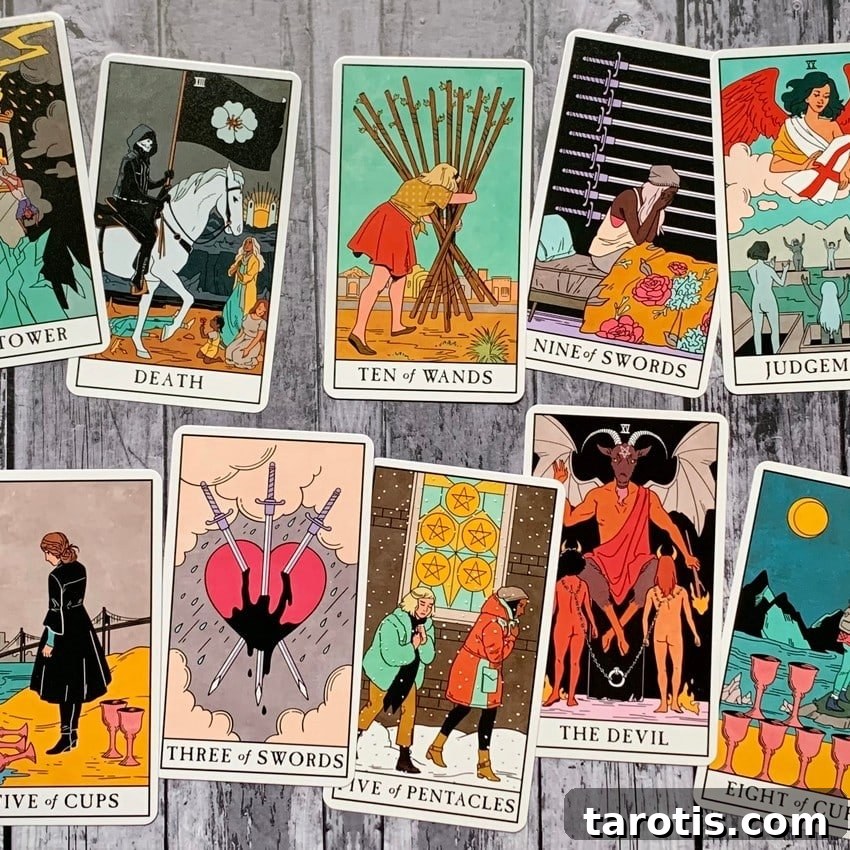
When it comes to Tarot, certain cards often provoke fear or unease. Even experienced readers can feel nervous when challenging archetypes appear in a spread. Difficult cards can stir anxiety, but they also carry important messages when approached with clarity and care.
Cards like The Tower, Death, The Devil, Judgement, 8 of Cups, 3 of Swords, 10 of Wands, and 5 of Pentacles belong to the Major and Minor Arcana, which together explore the full range of human experience. Naturally, some archetypes point to hardship, endings, or intense emotions. Encountering these cards can be unsettling, and the effect intensifies when they appear in combination.
What happens when two “negative” cards show up together? How can you unpack the layered meanings and find constructive, empowering guidance in a difficult reading? The Tarot is generous with its insight: even the most frightening card can reveal wisdom and possibility if you look closely. Below are several pairings that are commonly feared, with practical interpretations that emphasize growth, clarity, and action rather than doom.
6 “Negative” Tarot Pairings Explained
6 of Swords & 8 of Cups
Both cards represent departures, but from different places. The 6 of Swords relates to the mental strength and resolve it takes to walk away from harmful situations. It highlights intentional movement toward a calmer, healthier mindset. The 8 of Cups speaks to emotional release—recognizing when a relationship, dream, or pattern is broken beyond repair and choosing to leave it behind in search of something more meaningful.
Together they ask you to examine what is draining you and identify the path forward. Use the clarity of mind from the 6 of Swords and the emotional courage of the 8 of Cups to pursue what nurtures you rather than what depletes you.
Ask yourself: What are you ready to leave behind? What could you pursue that brings real fulfillment and personal strength?
Hermit & 4 of Swords
Both cards call for retreat, but with different emphases. The Hermit invites inward exploration and deliberate solitude for insight and spiritual growth. It’s an active searching of inner truth rather than mere rest. The 4 of Swords, by contrast, emphasizes the need for rest and recuperation—an intentional pause to recover energy and integrate experiences.
When paired, these cards encourage a balanced withdrawal: take time to heal and rest, and also use solitude to reflect and gain perspective. This combination supports both recovery and meaningful self-discovery.
Ask yourself: What do your mind and body need to recuperate, and what insights are emerging when you create quiet space?
5 of Cups & 10 of Swords
These are heavy cards that confront grief and perceived defeat. The 5 of Cups validates sorrow and mourning while gently reminding you that not everything is lost—support and resources remain. The 10 of Swords often highlights a sense of finality and can also point to patterns of self-sabotage or refusing responsibility.
Together they offer a dual message: allow yourself to grieve, but also examine whether pain has turned into stagnation or victimhood. This pairing encourages honest assessment and a willingness to move forward when you’re ready.
Ask yourself: Are things truly hopeless, or are there steps you can take to reclaim agency and make progress?
The Tower in Tarot Readings
The Tower is one of the most feared cards, often depicted as sudden chaos or collapse. Yet it’s not simply destruction for its own sake. The Tower tends to reveal a failing foundation—something already unsustainable that must fall away. Rather than a perfect catastrophe, it can be a necessary wake-up call, clearing space for truth and new growth.
If The Tower appears, take time to breathe and assess what’s no longer working. Consider what you’ve been clinging to and why. The upheaval may feel harsh, but it can create room for transformation and freedom.
The Tower & 3 of Swords
This pairing often points to painful truths that can’t be ignored. The Tower exposes structural flaws; the 3 of Swords forces emotional clarity about where you’ve been hurt or deceived. Together they urge you to stop denying what’s true and to face the reality of a situation.
Ask yourself: Where have you been in denial, and how might acknowledging the truth help you heal and move forward with greater awareness?
The Tower & Death
Both cards relate to endings, but in different tones. Death represents inevitable, often gradual conclusions that make way for rebirth. The Tower typically signals more abrupt, dramatic change. Although both can be unsettling, they also create opportunities for profound transformation and renewal.
Ask yourself: What narrative or habit are you holding onto that prevents growth? What can this ending make room for in your life?
The Tower & 10 of Wands
The 10 of Wands illustrates the burden of taking on too many responsibilities, while The Tower brings sudden collapse. Together they highlight the danger of relentless overexertion: when fragile structures give way, the fallout can feel catastrophic.
This combination urges you to reassess what you’re carrying and to release unnecessary loads. Prioritize rest, set realistic boundaries, and allow yourself to regroup before pushing toward the next goal.
Ask yourself: Which responsibilities can you let go of to preserve your well-being? How can you move forward more sustainably?
Navigating “Negative” Tarot Pairings
When confronting difficult Tarot pairings, keep an open mind and take time to interpret the nuances. Scary cards can be gateways to meaningful insight when you resist panic and look for practical guidance. Rather than treating these cards as final judgments, use them as tools for honest reflection, boundary-setting, and purposeful change.
Ask what the cards want you to learn and how you can apply that knowledge to reclaim agency in your life. Even the most challenging archetypes can reveal opportunities for healing, growth, and renewed direction.
This post features images from the Modern Witch Tarot.