
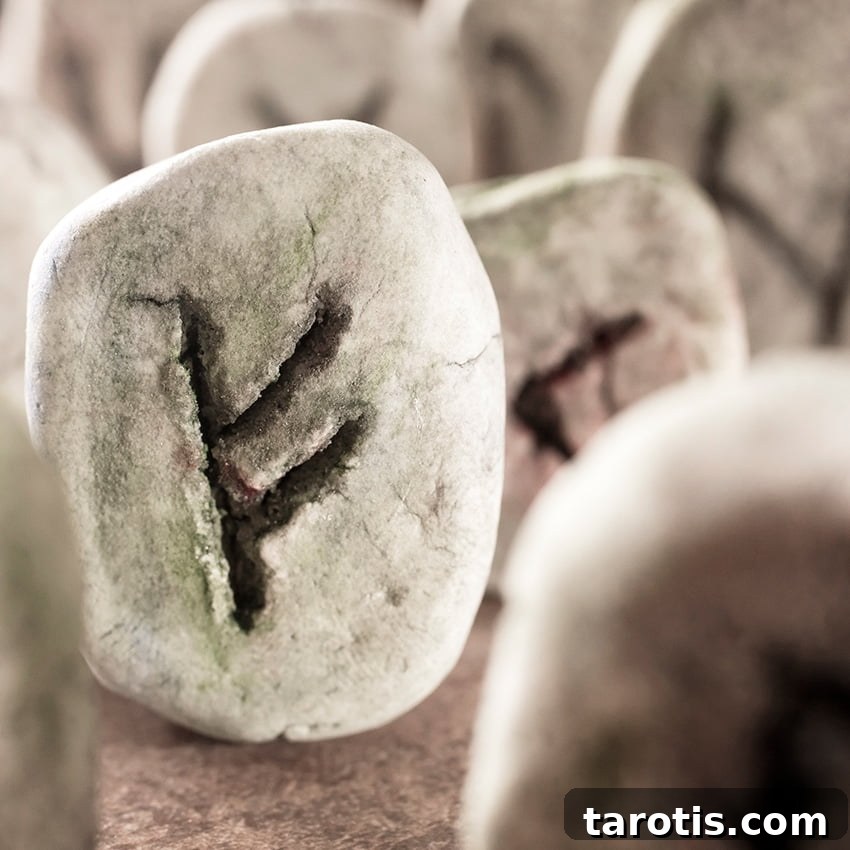
Discovering a new form of divination can be refreshing—especially when familiar tools begin to feel predictable or stop delivering clear insights. Exploring alternative methods for self-reflection can open up fresh perspectives on your emotional and spiritual life. If you’re considering adding rune stones to your divination toolkit, read on to learn how these ancient symbols can deepen your practice.
Where Do Rune Stones Originate?
The runic alphabet traces back to roughly the 4th century, when runes functioned primarily as a writing system rather than mystical symbols. Often seen as a Germanic counterpart to the Latin alphabet, runes served as the primary written language across ancient Scandinavian regions. They were used to mark graves, assert ownership, record events, and more. Because runes began as a practical script, it took centuries of study for scholars and practitioners to assign consistent symbolic meanings to each character.
In modern times, runes gained renewed popularity following the publication of The Book of Runes in the early 1980s, which remains widely referenced today. Contemporary rune stone sets, often sold with a pouch for casting, are primarily used for divination and personal guidance.
How Do Rune Stones Work?
Rune readings resemble other intuition-based systems like tarot. A set of rune stones is typically charged with personal energy before a reading—this might involve holding the stones while focusing on a question or intention. Readings vary in scope: you can pull a single stone for a quick answer or perform more elaborate layouts. One traditional method, the Futhark lay, uses all 24 runes and is sometimes cast on New Year’s Day to glean insight into the year ahead. Different spreads and practices exist, and many guides describe thirteen common readings and their purposes.
Like tarot, runes may carry altered meanings when drawn reversed, so it’s helpful to consult a reliable rune guide to interpret any nuances in your reading.
Meanings of the Common Rune Stones
Most beginner sets include 24 traditional runes from the Elder Futhark. Below are concise interpretations of the core runes often found in standard divination sets.
 Mannaz – The Self
 Mannaz – The Self
Mannaz represents self-awareness, identity, and interpersonal dynamics. Reversed, it can signal the need for introspection or feelings of isolation.
Gebo – Collaboration
 Gebo – Collaboration
Gebo, the Gift rune, points to opportunities, partnerships, and mutual exchange. It is often considered non-reversible—its value depends on how you accept and interpret the offering.
Ansuz – A Sign
 Ansuz – A Sign
Associated with messages, wisdom, and communication, Ansuz can indicate clarity and insight. When reversed, it may warn of miscommunication or confusion.
Othila – Attachments
 Othila – Attachments
Othila denotes heritage, boundaries, and what we hold dear. Upright, it can speak to separation or defined limits; reversed, it may suggest openness and inclusion.
Uruz – Strength
 Uruz – Strength
Uruz embodies physical and inner strength, courage, and potential. Inverted, it can indicate missed opportunities, weakness, or the need to reclaim personal power.
Perth – Initiative
 Perth – Initiative
Perth relates to potential outcomes and decisions. It often signals a turning point where action may lead to reward—or where risk is involved depending on how you proceed.
Nauthiz – Opposition
 Nauthiz – Opposition
Nauthiz reflects challenge, restraint, and lessons learned through difficulty. While it mainly denotes hardship, reversed readings can emphasize growth and learning from struggle.
Inguz – Rebirth
 Inguz – Rebirth
Inguz signals transformation, renewal, and the end of negative cycles. Often viewed as celebratory and creative, it is typically interpreted as positive without a strict inverse.
Eihwaz – Patience
 Eihwaz – Patience
Eihwaz encourages endurance and wise acceptance of timing. It suggests letting natural processes unfold and practicing resilience rather than passivity.
Algiz – Transition
 Algiz – Transition
Algiz points to impending change and how you will respond. Upright it encourages confident action; reversed it advises caution and reassessment.
Fehu – Wealth
 Fehu – Wealth
Fehu signifies gain—whether financial, emotional, or energetic. Reversed, it can warn of loss, stagnation, or the need to protect resources.
Wunjo – Restoration
 Wunjo – Restoration
Wunjo brings renewed joy, balance, and confidence. Drawn reversed, it may indicate doubt or diminished morale that requires attention.
Jera – Stability
 Jera – Stability
Jera represents cycles, harvest, and the consequences of actions. It can indicate productive outcomes when nurtured—or loss if opportunities are neglected.
Kano – Sacrifice
 Kano – Sacrifice
Kano points to effort, discipline, and the costs of growth. Reversed, it may suggest releasing what no longer serves you or reevaluating your commitments.
Teiwaz – Conquest
 Teiwaz – Conquest
Teiwaz emphasizes determination, focus, and purposeful action. If reversed, it can indicate scattered energy, lost motivation, or the need to rededicate yourself.
Berkana – Awareness
 Berkana – Awareness
Berkana calls for careful attention, nurturing, and practical care. Inverse readings may reveal uncertainty, indecision, or a need to regain grounding.
Ehwaz – Progress
 Ehwaz – Progress
Ehwaz signals movement forward, partnership, and positive transitions. Reversed, it may point to stagnation or obstacles blocking progress.
Laguz – Alignment
 Laguz – Alignment
Laguz relates to intuition, emotional flow, and inner alignment. When reversed, it can indicate confusion, self-deception, or a need to reconnect with your inner truth.
Hagalaz – Warning
 Hagalaz – Warning
Hagalaz signals significant and sometimes sudden change. This rune often carries a clear message: prepare emotionally and practically for transformation.
Raido – Changes
 Raido – Changes
Raido focuses on the journey—how you move through change and what you learn along the way. Reversed, it can suggest stalled progress or dissatisfaction with the path.
Thurisaz – Energy
 Thurisaz – Energy
Linked to powerful forces, Thurisaz can be protective and energizing but also potentially disruptive. Approach situations it highlights with care and clear intent.
Dagaz – Awareness
 Dagaz – Awareness
Dagaz is a rune of breakthrough, clarity, and positive transformation. Often interpreted as a celebratory sign, it typically indicates newfound insight or growth.
Isa – Temperance
 Isa – Temperance
Isa calls for stillness, restraint, and conserving energy. If you’ve been pushing too hard, this rune encourages patience and a calming of momentum.
Sowilu – Completion
 Sowilu – Completion
Sowilu represents the successful end of a cycle and the illumination that comes with completion. Like any ending, it also implies the beginning of a new phase.
Time to Cast Your Stones
Rune stones offer layered meanings and adaptable interpretations, making them a versatile addition to any divination practice. With regular use and study, they can provide meaningful guidance for personal growth and self-discovery. Practice different spreads, keep notes on your readings, and allow your understanding of the runes to deepen over time.