
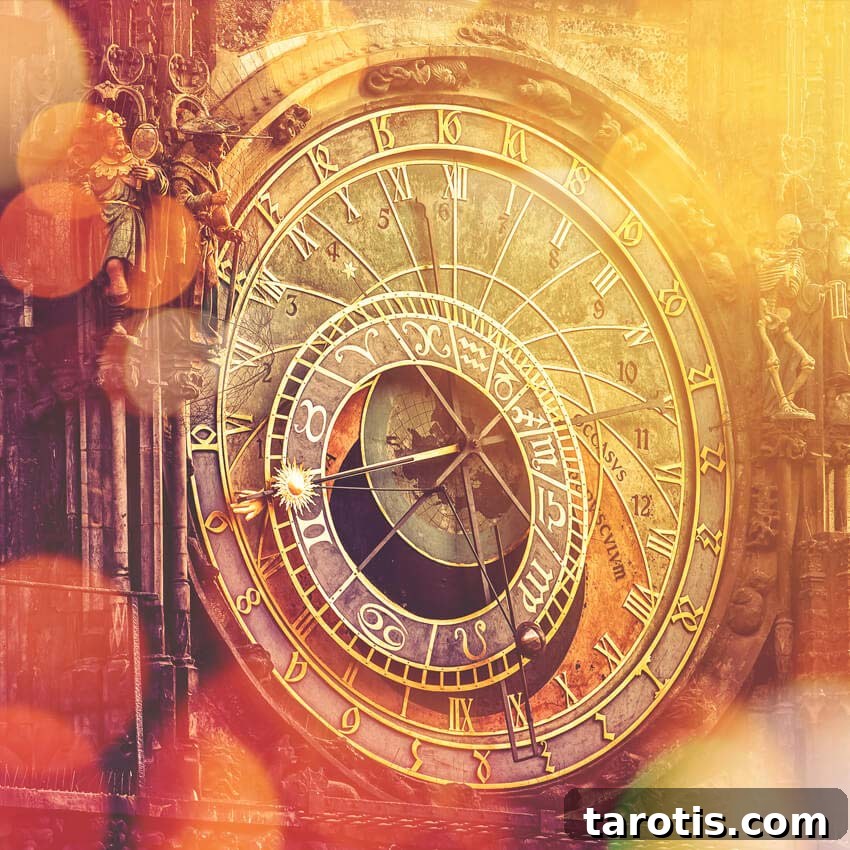
Many people are unaware of astrology’s long and influential history. Today it is often seen simply as a form of divination, but throughout the centuries some of the most important scientists, philosophers, and political advisers practiced astrology alongside their other pursuits.
Modern thinking tends to separate astronomy and astrology, yet historically the two disciplines were closely intertwined. Leading experts in both fields used astronomical observations and astrological interpretation to advise rulers, make predictions, and shape scientific inquiry.
From forecasting the Great Fire of London to advising Emperor Constantine on the founding of Constantinople, astrologers have shaped events since at least 3,500 BCE in Mesopotamia and since 1046 BCE in Chinese astrology. Notable astrologers appear across the written records of Egypt, Greece, Rome, China, India, and Babylon, and their influence reaches into the foundations of modern Western astrology.
Below is a brief look at several influential figures—people whose work touched astrology and, in many cases, broader history or science.
William Lily – William Lily (1602–1681) published one of the first major works on astrology in the English language and was regarded as England’s most important astrologer of his era. He is said to have predicted the Great Fire of London 15 years before it occurred and was a noted practitioner of horary astrology, with influential friends at court.
Nechepso and Petosiris – These two figures from Egypt, often described as a king and his priest, are cited as early authorities in the development of Hellenistic astrology. Living around the first century BCE, they influenced the horoscopic traditions used during and after the time of Alexander the Great, which later formed the foundation of Western astrological practice.
Masha’allah – An eighth-century Persian court astrologer, Masha’allah played a key role in political decisions surrounding the founding of Baghdad. He authored influential works on horary astrology that informed later generations of astrologers across the Islamic world and beyond.
Susan Miller – A contemporary figure and one of the best-known astrologers in the United States, Susan Miller rose to prominence with her work on compatibility and popular horoscopes. Her writings and forecasts have made her a prominent celebrity astrologer with a large following.
Johannes Kepler – The seventeenth-century German mathematician and astronomer Johannes Kepler was a central figure of the scientific revolution. Kepler practiced astrology in his time and his precise laws of planetary motion later informed Isaac Newton’s theory of universal gravitation. His blend of observational astronomy and astrological work illustrates the historical overlap between the disciplines.
Aristotle – Often called the father of Western philosophy, Aristotle (384–322 BCE) made foundational contributions to metaphysics, natural philosophy, and scientific thought. As a leading intellectual of ancient Greece and teacher to Alexander the Great, his influence extended across many fields that intersected with astrological and cosmological ideas of his time.
Nostradamus – Michel de Nostredame (1503–1566), commonly known as Nostradamus, is famous for his prophecies and widely circulated almanacs that offered daily predictions. A physician and seer, his quatrains and forecasts remain a cultural touchstone for prophetic literature.
Galileo Galilei – Often called the father of modern science, Galileo was instrumental in advancing Copernican heliocentrism and transforming observational astronomy. A physicist, engineer, astronomer, and mathematician, his era still linked astrology with the mathematical and astronomical practices he advanced.
Claudius Ptolemy – Living in Roman Egypt, Ptolemy produced works that sought to harmonize scientific observation and astrological interpretation. His Tetrabiblos, written in the second century, remains one of the foundational texts of Western astrology. Ptolemy’s broader contributions to geography and astronomy influenced Islamic, European, and Byzantine scholarship for centuries.
Alan Leo – A modernizing force in astrology during the late 19th and early 20th centuries, Alan Leo (1860–1917) helped make astrological knowledge more accessible to a general audience. Often called the father of modern astrology, his writings and teachings popularized new approaches that still resonate in contemporary practice.
Conclusion
The list above is only a sampling of the many individuals who bridged astrology, science, philosophy, and public life. Each of these figures represents a larger story: how knowledge about the heavens has been gathered, interpreted, and applied across cultures and eras. Their work illustrates how astrology has been woven into the fabric of human inquiry from ancient times to the present.
Astrological traditions were carefully transmitted through generations, beginning with early depictions of zodiac signs and symbolic animals. While scientific methods and worldviews have evolved, astrology continues to attract interest from influential thinkers and everyday people alike, who look to planetary patterns as a source of insight.
Whether viewed as symbolic language, cultural heritage, or a practical guide, astrology has helped many people explore connections between the cosmos and human life, across diverse belief systems.
Related Article: 4 Myths About Astrologers Busted