

When you consult astrology forecasts and predictions to guide life decisions, you will often encounter the term “transit periods.” If an astrologer studies your birth chart or solar return chart, this phrase will likely come up again.
Planets are constantly moving through the sky; astrologers call that movement a transit. When a planet makes a significant passage, that transit can mark an important time for events in a month, a year, or across a lifetime.
Not all transits carry the same weight. The “personal” or inner planets — Mercury, Venus, Mars, and Jupiter — tend to influence daily life in smaller, more fleeting ways. The outer planets, however, create far-reaching effects that unfold slowly and endure: Saturn, Uranus, Neptune, and Pluto. Their transits are transpersonal and often reshape larger themes in life. Below we explore how each of the outer planets tends to affect life on Earth.
Learn more about The Planets in Astrology here.
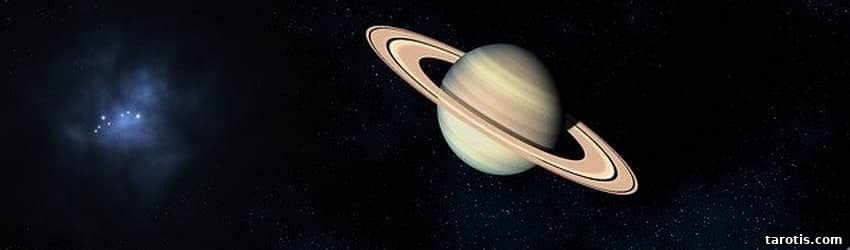
The Planet Saturn
Saturn is often called the planet of karma. It is the sixth planet from the Sun and the second-largest in the solar system. Saturn completes an orbit in roughly 29.5 Earth years and typically spends two to three years in each zodiac sign.
What Saturn Means
In mythology, Saturn (Cronus) is associated with time, structure, and order. Astrologically, Saturn symbolizes limits, responsibilities, and the lessons that arise from discipline. Its influence highlights where structure or boundaries are needed and where experience and maturity must replace shortcuts.
Saturn’s Effect
Saturn transits can feel heavy: you may experience restriction, loneliness, or a sense that life has slowed. These periods often demand patience and sustained effort. The point of Saturn’s lessons is practical — to bring order to areas of life that need tending. When you respond responsibly to Saturn’s demands, long-term rewards follow: stability, accomplishment, and a stronger foundation upon which to enjoy life.

The Planet Uranus
Uranus, the blue ice giant, is named for the Greek sky god. As the seventh planet from the Sun, Uranus takes about 84 Earth years to orbit, spending roughly seven years in each zodiac sign. Because of this timing, Uranus often marks generational shifts and collective innovations.
What Uranus Means
Uranus represents the unconventional, the unexpected, and the impulse to break free from established patterns. Mythologically tied to chaos and the heavens, Uranus energy encourages originality, rebellion, and radical change. When Uranus transits key points in your chart, routines can be disrupted and sudden opportunities for freedom or reinvention can arise.
Uranus’ Effect
Uranian transits often bring surprises that defy expectations. In relationships, for example, Uranus may inspire unusual arrangements, sudden beginnings or endings, or the need for greater independence. These changes are not inherently negative — they can reveal unique talents, spark creative breakthroughs, or push you to embrace a more authentic path. To work with Uranus, loosen rigid structures, experiment, and welcome inventive solutions.

The Planet Neptune
Neptune, the Roman god of the sea’s namesake, is the eighth planet from the Sun and completes an orbit in about 165 years. Neptune moves slowly through the zodiac, changing signs approximately every 10 to 12 years. Its influence often touches collective dreams, imagination, and spiritual sensibilities.
What Neptune Means
Neptune rules intuition, fantasy, and compassion. It encourages inward exploration, artistic inspiration, and a softer focus on reality. While Neptune can deepen spiritual awareness and creativity, it can also blur boundaries and create confusion when its influence is unchecked.
Neptune’s Effect
During Neptune transits you may experience heightened sensitivity, vivid dreams, and an attraction to romance or idealism. At the same time, there’s a risk of deception, escapism, or misplaced trust. To navigate Neptune’s energy, balance receptivity with discernment: record dreams, follow intuitive prompts, but verify facts before acting. When harnessed wisely, Neptune opens paths to artistic vision and deeper inner knowing.

The Planet Pluto
Pluto, now classified as a dwarf planet in the Kuiper belt, carries powerful symbolic weight in astrology. It has an orbital period of about 248 years and spends long stretches—often 13 to 32 years—in each sign, due to its elliptical orbit. Pluto is associated with deep transformation, endings, and rebirth.
What Pluto Means
Pluto (Hades) symbolizes death and regeneration, the unseen forces that drive psychological and social change. Its mythology evokes themes of power, secrecy, and the underworld. Astrologically, Pluto asks us to confront shadow material, release what no longer serves, and emerge renewed.
Pluto’s Effect
Pluto transits are intense and often catalytic. They test resilience and compel profound inner work. Transformation under Pluto might involve loss, upheaval, or stripping away of superficialities, but it can also lead to empowerment, greater authenticity, and renewed purpose. Embracing Pluto’s process—letting go, healing, and rebuilding—opens the door to lasting change and deeper fulfillment.
The Outer Planets Look Inside
When one of the outer planets makes a significant transit in your birth chart or appears in monthly or yearly astrological forecasts, expect meaningful shifts. These planets tend to trigger long-term developments rather than quick fixes. Their influence is not necessarily negative; it simply prompts a deeper examination and reorganization of life’s priorities.
The most effective approach during outer-planet transits is to surrender to the process where appropriate, trust intuitive insights, and remain open to transformation. Responding with awareness and responsibility helps you move through change toward the growth these transits can offer.
Related article: Your Ultimate Guide to Birth Charts