
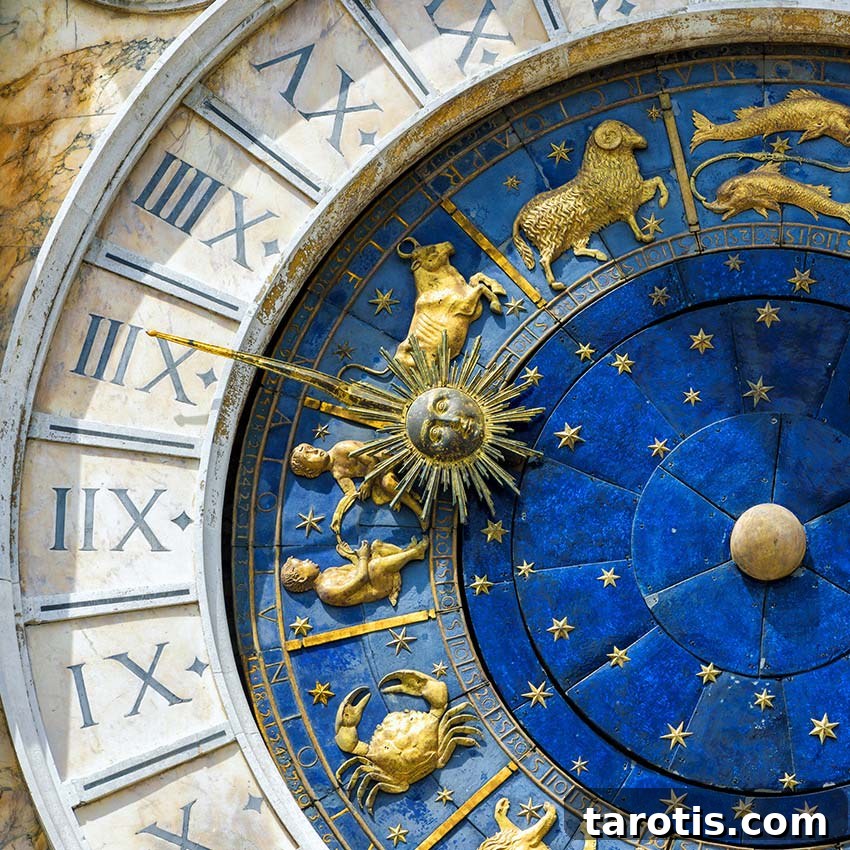
I talk to people all the time who don’t know where to begin when it comes to learning astrology. That’s why I wrote this article: to offer a clear, practical introduction that helps you get started with confidence.
I’ve collected five of the most straightforward and useful concepts to learn first. Once you understand these basics, you can use astrology to better align with your life purpose and to understand how other people operate. These ideas help you recognize your natural strengths and weaknesses so you can balance and grow. Astrology also maps cycles that reveal when major events are likely, when to begin projects, and when delays are probable. Learning to plan with these cycles can make life much easier. Deepening your understanding of the world and the Self takes time, but it’s a rewarding investment. Watch for major cosmic events and you’ll begin to see repeating themes in your life that connect with planetary movement.
Beginner’s Astrology: 5 Things To Know First
1. The Primal Triad
The Primal Triad refers to the three most influential parts of your birth chart: the Sun, the Moon, and your Ascendant (Rising sign). These are set by your exact birth time and location. Knowing a person’s primal triad reveals a great deal about how they think, feel, and present themselves.
Your Sun sign represents your core identity and ego. In Western astrology the Sun is primary: it shapes how you develop, what motivates you, and how you act in the world—your career inclinations, skills, and general approach to life.
Your Moon sign reveals your emotional inner world—how you feel, what you need emotionally, and how you respond in intimate relationships. In some systems, like Vedic astrology, the Moon and Ascendant are given special importance for assessing temperament and life patterns.
The Ascendant, or Rising sign, is the face you present to others. It describes your outward manner, first impressions, and the lens through which you approach the world. Sometimes the Ascendant acts like a mask that hides deeper parts of the self.
2. North Node
The North Node points toward what your soul is here to learn. It represents unfamiliar territory—qualities and experiences you must develop for growth. The South Node, its opposite, shows your comfort zone and ingrained habits. Staying only in the South Node can lead to stagnation or dissatisfaction. Embracing the North Node can open a path to a more meaningful and fulfilling life.
3. Houses
The birth chart is divided into twelve houses, each showing a different area of life. The sign on the cusp of each house and any planets within it describe how that life area expresses itself for you. A brief overview:
- 1st house: persona and self-image
- 2nd house: finances, values, and resources
- 3rd house: communication and immediate environment
- 4th house: home, family, and foundations
- 5th house: creativity, romance, and self-expression
- 6th house: daily routines, health, and service
- 7th house: partnerships and close one-on-one relationships
- 8th house: shared resources, transformation, and deeper bonds
- 9th house: philosophy, higher learning, and travel
- 10th house: career, reputation, and public life
- 11th house: community, friendships, and goals
- 12th house: spiritual growth, hidden patterns, and surrender
Your full chart interpretation will show how each sign and planet colors these areas, revealing inner patterns and life themes.
4. Traits of Each Zodiac Sign
There are twelve zodiac signs; learning their core qualities helps you recognize how those energies show up in different parts of a chart and in people’s personalities. Basic descriptions:
Aquarius: visionary and big-picture oriented. Pisces: imaginative and sensitive. Aries: quick, decisive, and action-oriented. Taurus: steady, patient, and grounded. Gemini: curious, communicative, and adaptable. Cancer: nurturing, protective, and emotional. Leo: confident, expressive, and attention-loving. Virgo: practical, organized, and helpful. Libra: balanced, social, and relationship-focused. Scorpio: intense, private, and transformative. Sagittarius: adventurous, philosophical, and freedom-loving. Capricorn: disciplined, responsible, and goal-oriented.
5. Moon Cycles
The Moon moves through phases roughly every two weeks, cycling between new and full. The New Moon is a more inward time—when the moon is not visible and creative seeds can be planted. This phase encourages reflection and quiet planning. The Full Moon marks visible culmination: when one side of the moon is fully illuminated and events often come to fruition. The days around a full moon—typically two days before and two days after—are a common window for changes, breakthroughs, or the results of efforts to appear.
Working with moon phases can help you time beginnings and completions and support manifestation practices tied to intention and action.
Conclusion
Once you’re comfortable with these five basics, begin tracking three additional things:
- Which sign the Moon is in during new and full moons, to fine-tune the type of energy available.
- Which sign the Sun is transiting each month, to understand the overall mood and focus of that period.
- Mercury retrograde periods, since communication, travel, and technology can feel disrupted or require extra care during those times.
Astrology is a lifelong study. When I began, I learned the personalities of each sign, studied their symbols, and practiced reading charts to see how planets and signs interact. Horoscopes are only a brief glimpse into a much larger system. At its best, astrology offers a map to greater self-awareness, stronger relationships, and a clearer path toward personal fulfillment.