
Your chakras influence your health, energy levels, clarity of thought and emotional balance. All these factors shape how you experience life and how you interact with others. When you feel consistently positive, it’s easier to form friendships, resolve conflicts and attract new opportunities.
Below is an ancient meditation taught by Yogi Bhajan, a guru from India, designed to clear and balance the chakras. Often called “the greatest divine key,” this practice aims to connect you with greater energy. Beyond the poetic idea of “cosmic energy,” clearing your chakras offers practical benefits in daily life.
Balanced chakras support self-assurance, clearer speech, sustained vitality, improved health and better memory. On a deeper level, a clear energy system helps you access inner guidance when making important decisions and can support a stronger sense of spiritual connection.
Adi Shakti Mantra
The Adi Shakti meditation can be practiced for as little as seven minutes or for up to two and a half hours. You can use a healing mantra recording to help guide the rhythm and breathing; the chant itself helps balance chakras that are either overactive or underactive.
Teachers of this lineage note that this mantra can amplify your thoughts, so after practicing it, keep your focus on positive intentions for at least 24 hours to make the most of the effect.
Begin seated with legs crossed. Start by chanting the opening kundalini yoga mantra three times: “ong namo, guru dev, namo.” You may chant aloud or silently. This opening establishes a consistent mental state for the meditation.
For the strongest results, practice the meditation daily for at least 40 consecutive days. Think of it like taking a supplement: consistency produces lasting change.
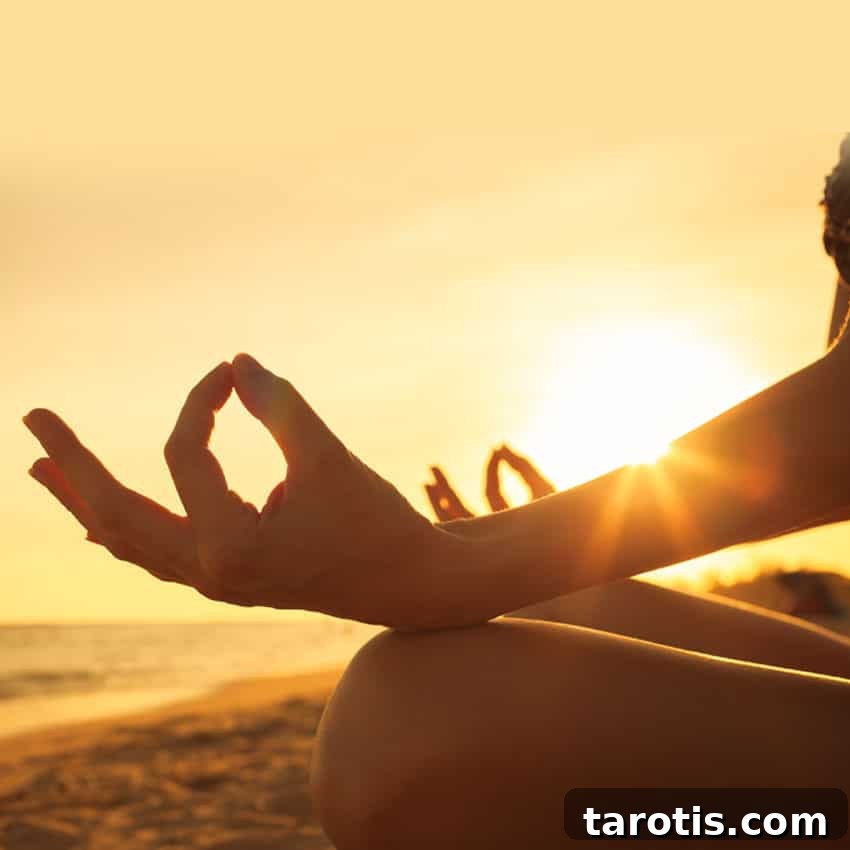
Throughout the meditation, form a mudra by pressing the thumb and index finger together. Keep your eyes closed and gently retract the chin so the neck aligns with the spine—this neck-lock helps energy flow along the spine.
Take a deep, full inhale. As you say “Ek,” engage a root lock by pulling the navel and pelvic area up and inward. Still on that breath, say “Ong” while focusing mentally on the navel, then say “Kar” and bring awareness to the solar plexus at the base of the ribs.
Take a second deep inhale. Say “Sat” quickly while focusing on the heart center. On the same breath, extend into a long “Nam” with attention at the throat. Using the final portion of that breath, say “Siri” and focus on the third eye between the eyebrows. Take a small inhale and say “Wah” as you focus on the crown of the head.
Visualize the energy rising and flowing around your body, returning down to the root chakra while chanting “Hey Guru.”
The full mantra sequence spans about two and a half breath cycles. At the end of your chosen session length—many practitioners prefer around 31 minutes—seal the practice by chanting “Sat Nam” three times. This closes and stabilizes the energy you have raised. Kundalini yoga, through breathwork and mantra, works directly with the energetic and emotional body.
Its methods appeal to busy professionals, creatives and people in recovery because the practices tend to produce noticeable changes in mood, focus and the ability to manifest intentions when combined with disciplined breathwork and sound.
Conclusion
The body can be seen as an instrument that resonates in different chambers. Mantras help re-pattern the brain and organize scattered energy. They also stimulate the pineal and pituitary glands; the pineal, often linked to the third eye, is associated with deeper intuition and altered states of awareness.
Regular chanting of this mantra supports opening the third eye and strengthening spiritual connection. The mantra conveys the idea that one creative force is behind creation and that truth and infinite wisdom are inherent in that source. Kundalini yoga is a set of techniques developed to work with subtle energy—not a religion, but a practical technology to access and expand your consciousness.
While people of many faiths practice these methods, they focus on regulating and awakening subtle energy channels—techniques refined by yogic traditions over millennia.
Chakras can become blocked by poor posture, lack of movement, chronic stress or unresolved emotions. Blocked energy can influence the physical organs and systems associated with each chakra. Caring for your energetic and emotional well-being is as important as maintaining physical health, so include practices that support balance, movement and emotional processing in your routine.