
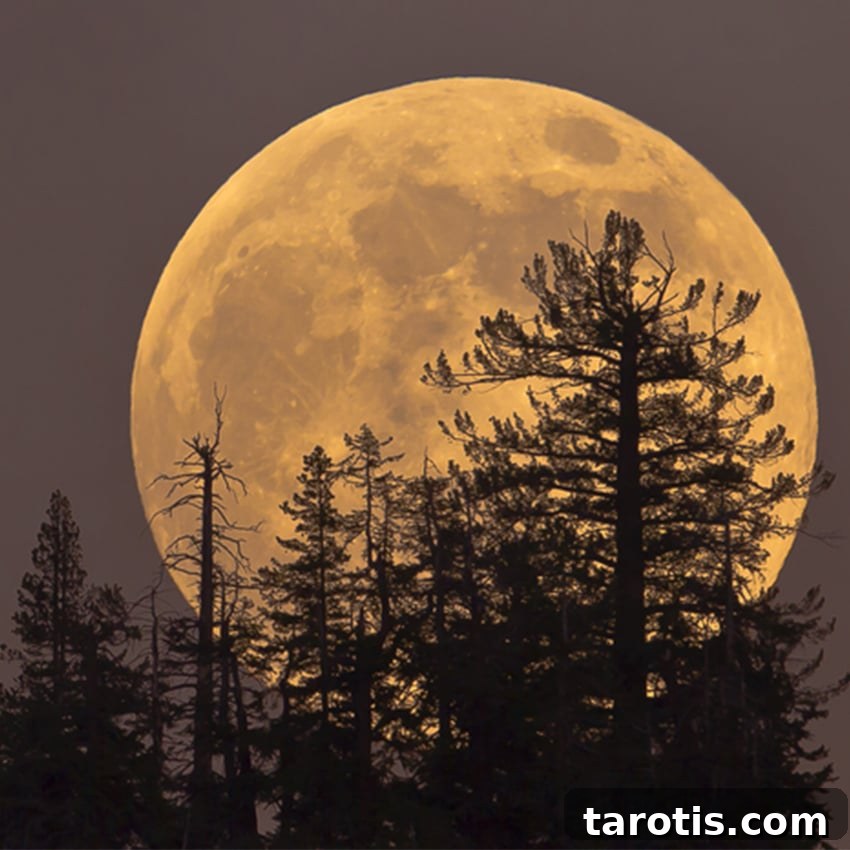
The December 2016 supermoon reaches peak fullness at 7:05 p.m. EST (00:05 GMT) on December 14.
If you’ve read astrology coverage over the past few years, you’ve likely encountered lots of talk about “supermoons.” Every season seems to bring headlines about a moon that’s closer, brighter, or somehow more powerful. November’s supermoon was unusually close and bright — the closest we’d seen in decades — and now December brings another supermoon. But how much of the buzz is hype, and how much reflects a real, observable difference?
What Is a Supermoon?
To understand a supermoon, it helps to remember that the Moon’s orbit around Earth is elliptical rather than perfectly circular. At its closest point to Earth (called perigee), the Moon can be significantly nearer than at its farthest point (apogee). When a Full Moon or New Moon coincides with perigee, astronomers and popular media often call it a “supermoon.”
Although November’s supermoon was exceptionally close, the change in its gravitational effect on Earth was negligible — and the same is true for December’s event. Expect no extreme weather or supernatural phenomena tied to this moon. Visually, a supermoon can appear up to around 7% larger than an average full moon, a difference caused partly by reduced distance and partly by atmospheric effects. Because December’s supermoon does not come as close as November’s did, most observers probably won’t notice a dramatic size difference with the naked eye.
Sometimes you’ll hear claims the Moon appears 15% larger; that figure usually compares a supermoon to a micromoon (a full moon occurring near apogee). In everyday viewing, size differences are subtle unless you have photographic comparisons. Brightness can be more noticeable: increases of 10–30% are sometimes reported, with 12–15% more common.
Supermoon Astrological Forecast
Astronomy explains the mechanics, but many people want to know how a supermoon might influence mood or behavior. This particular full moon peaks on December 14 at 00:05 GMT in the zodiac sign of Gemini. Gemini energy commonly highlights social interaction, curiosity, and mental activity, so this lunation could stimulate conversation, networking, and busy, scattered thoughts. The combined effect of a Full Moon in Gemini may make it easier than usual to overcommit or spread your attention thin.
There is also a Void of Course (VoC) Moon period around this time that lasts roughly six hours and ends at 00:08 GMT when the Moon enters Cancer. Once the Moon moves into Cancer, emotional themes often intensify. Feelings may run deeper, and you might experience greater sensitivity, mood swings, or a desire for comfort and security. If you need solitude or emotional downtime, honor that need even if social obligations are calling. Smaller, more intimate gatherings will generally feel more satisfying than large crowds, and expressing genuine feelings can strengthen close relationships.
Nurturing and caretaking instincts tend to be heightened under a Cancer Moon, so this is a good time to focus on family, home, and emotional support. Try to stay calm and centered: excess nervous energy can contribute to digestive or stress-related issues. December 14 is also favorable for travel, celebrations, and social gatherings — if you have seasonal festivities planned, tap into the positive and convivial atmosphere.
Avoid the ‘Supermoon’ Hype, and Enjoy the View!
It’s fine to appreciate the excitement around a supermoon, but be cautious about sensational claims. This is an interesting and photogenic astronomical event, not a cause for alarm or expectation of dramatic life changes. If you observe lunar rhythms in your personal or spiritual practices, continue your usual rituals; this moon need not change them.
If you miss this supermoon, another will occur next December. While none of these events are likely to be transformative in a literal sense, they offer a chance to pause, look up, and enjoy a striking celestial sight — weather permitting. Take the opportunity to observe the Moon and savor the rhythm of the seasons.