
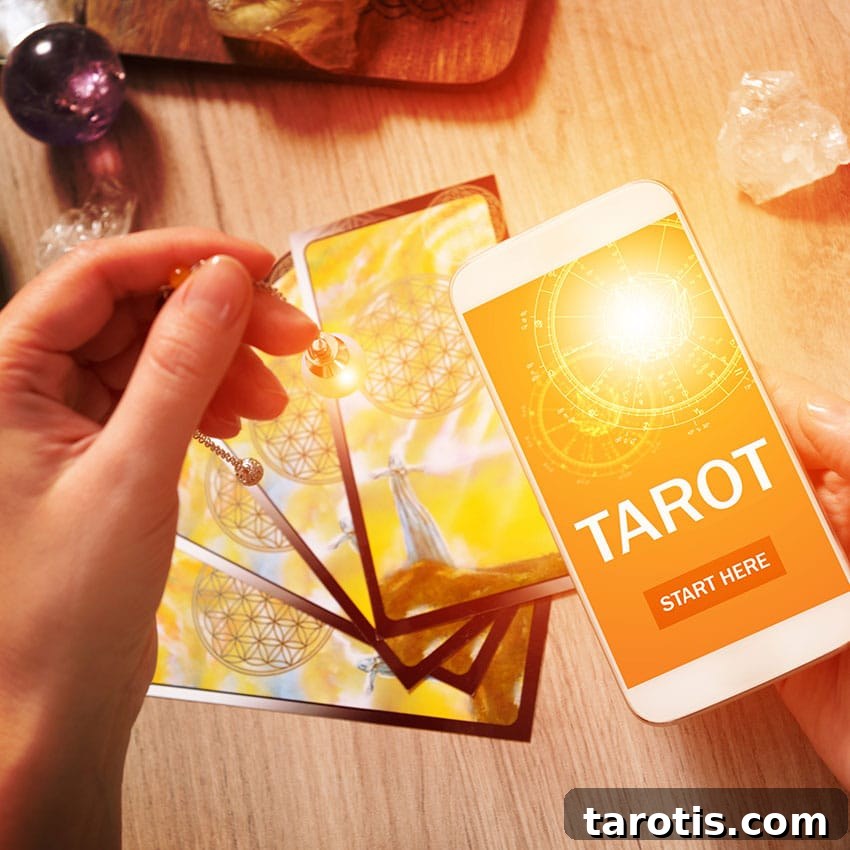
If you’re new to tarot, you might ask: what is a tarot card reading? The exact meaning depends on the reader’s approach and the seeker’s intention.
Tarot is a reflective tool that helps reveal patterns, inner motivations, and where we might be supporting or blocking our own success. By engaging the creative side of the brain, tarot can bypass rigid logic and open pathways to intuition and guidance. Used thoughtfully, it can help you align decisions with your values, cultivate spiritual growth, and act with compassion and purpose.
Negative perceptions of tarot usually stem from shallow interpretations, manipulative practitioners, or unrealistic expectations that require no personal effort. Those fear-based approaches strip empowerment from the seeker. In contrast, tarot used as a healing and clarifying practice helps you evaluate whether a perspective or choice aligns with your deeper truth.
Tarot taps into intuition. Some people resist change and remain skeptical of tarot apps, while others, always seeking new inspiration, may embrace them eagerly. Whether you lean toward optimism or skepticism often shapes how you respond to digital tarot tools more than the tools themselves.
This article aims to take an unbiased view of both traditional decks and tarot apps. We appreciate tarot as a meaningful way to access intuition and want to highlight both benefits and limitations. Changes in technology often inspire similar conversations—consider how recorded music changed how people experienced instruments—and tarot is part of that evolution.
Technology is Changing Many Practices
Apps can simplify parts of life—for instance, mobile check deposits save time. Tarot apps can serve as a practical complement to spiritual practice, offering added convenience when used with clear expectations.
Tarot Apps: Are They Worth Trying?
As a professional reader, I was skeptical of tarot apps at first. After exploring them, I realized apps can coexist with physical decks as another useful tool. Just as certain physical decks resonate at different times, some apps will feel right for you and others won’t. An app needn’t replace your collection; it can expand your toolkit.
Pros & Cons of Using an App for Tarot Reading
Before dismissing tarot apps, consider their advantages and disadvantages. You may use an app for quick, discreet guidance while reserving deeper work for physical decks. Below are practical points to weigh when deciding how apps fit into your practice.
Pros
Apps offer discreet access to tarot, which can be helpful in settings where public use of cards might attract unwanted attention. Many apps let you store spreads and notes, allowing you to track patterns and revisit past readings.
- Easy Transport — Carrying multiple physical decks can be cumbersome. A phone-based collection gives you instant access to a variety of deck styles for differing client needs and moods.
- Backup When You Forget Your Deck — Professional readers sometimes leave a deck behind. A digital deck on your device can save the day, especially while traveling.
- Practical Reference — Apps often include card meanings, making it easy to refresh your memory without carrying a guidebook. Stored readings can reveal recurring cards and themes more clearly.
Cons
Apps cannot fully replicate the energetic connection some readers feel with a physical deck. Technical issues and device limitations can also interfere with readings.
- Weaker Connection — If you form a strong bond with a physical deck, a digital version may feel less intimate or energetic.
- Technical Glitches — Apps and devices can crash or require an internet connection, which may interrupt a session.
- Battery Dependency — A dead phone can end a reading mid-session, so plan for a backup if you rely on apps professionally.
Pros & Cons of Using a Real Deck for Tarot Reading
Physical decks remain the preferred choice for many readers. They offer a tactile, familiar experience, but they also come with practical trade-offs.
Most readers retain strong loyalty to their first decks for good reasons: decks often serve as long-term companions and instruments of transformation.
Pros
- Stronger Personal Connection — Working with the same deck over time builds familiarity and a distinct relationship that many find essential for deep readings.
- Full Spread Visibility — Physical cards let you lay out entire spreads at once, making it easier to perceive relationships and narrative patterns across the layout.
- No Power Required — Cards require no batteries, passwords, or software updates. Your intuition remains accessible with or without electronics.
- Tangible Presence — Handling a card can help ground the reading, making the experience feel real and anchored in the physical world.
- Durability Across Device Changes — Decks remain with you across phone upgrades or loss; they aren’t tied to digital accounts.
Cons
Physical decks have vulnerabilities that digital tools avoid.
- Loss Risk — Misplacing a single card can render a deck incomplete; replacing missing cards isn’t always simple.
- Damage and Wear — Cards can bend, tear, or deteriorate over time, sometimes necessitating a full replacement.
- Less Socially Discreet — Pulling out a deck in public can attract attention, whereas consulting an app looks more ordinary to bystanders.
Conclusion
Trying a new tarot deck is always enjoyable, but if you want fresh perspective without investing in a physical deck, download an app and experiment. Apps are useful for discreet, on-the-go readings, quick practice sessions, or tracking patterns over time.
Free or low-cost digital readings can help you learn how the cards speak to you. Tarot is personal—use whichever tools help you develop your intuition. With apps, you can practice during short moments in daily life: while waiting in line, commuting, or on a break.
No matter which format you choose, prioritize tools that support your growth and help you understand your tarot readings better.