
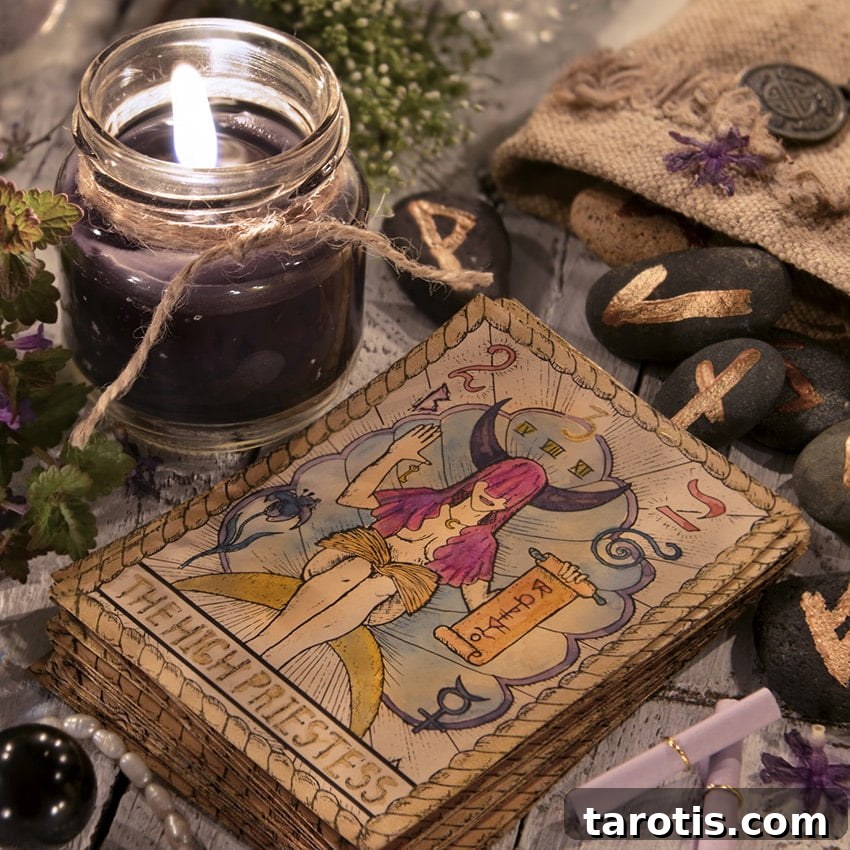
Have your tarot cards recently fallen silent? Maybe you’re new to working with them and haven’t yet learned how to interpret their messages. Whether you’re a beginner or an experienced reader, there are times when tarot work feels frustrating or disconnected.
Tarot is a divination tool — useful, but not miraculous. It won’t solve your life for you or magically remove problems. What it does offer is a neutral, third-party perspective that can reveal overlooked issues and suggest options you might not have considered. The insight comes from connecting with your unconscious mind and bringing hidden material into awareness. So when the cards don’t seem to be communicating, it’s usually a sign that something in your relationship with them needs attention.
Storage
If you want your tarot deck to speak to you clearly, start by storing it with care. Keep your cards somewhere secure when they’re not in use: a dedicated bag, a wrapped cloth, or a personal box. Proper storage reduces the risk of damage or loss and helps shield the deck from random or disruptive energies. Treating the deck as something special also makes the act of taking it out to work more intentional and meaningful.
Preparation
Many readers cleanse their decks when they first acquire them and continue with periodic or situational cleansings. Some prefer moon rituals, seasonal resets, or clearing the deck before each reading. There’s no single correct method — what matters is your intention.
Common cleansing techniques include placing the cards in moonlight, resting them near a purifying crystal, smudging with sage or another cleansing herb, or simply shuffling them mindfully. If the cards begin to feel dull, confusing, or less vivid, it’s a good time to reorganize them into their proper order (starting with the Fool through the Major Arcana and then the Minor Arcana suits), visualize them being refreshed, and then shuffle to re-establish connection.
Communication
Remember that communication with your cards is a two-way street. In readings I conduct, I tell clients there are three participants in the process: the client, the reader, and the cards. If any of the three are disengaged, the reading will likely feel unsatisfying.
Clarity matters. Vague or unfocused questions make it difficult for the cards to deliver useful guidance. Ask specific questions and be clear about the type of insight you want. Write your question in a tarot journal or speak it aloud; voicing it can help ground and clarify your intent. Then center yourself, concentrate on the deck, and invite the cards to respond.
Relationship
Building a respectful relationship with your deck strengthens its responsiveness. If you do readings for others, consider keeping at least one personal deck that’s used only by you. This helps ensure the messages you receive are tuned to your higher self and guides rather than carrying residual energy from other people. Caring for and honoring your personal deck deepens the connection and improves the clarity of your readings.
Conclusion
The tarot won’t perform miracles — they are images on card stock, not magical agents that force decisions. They can’t make you act in ways you haven’t chosen. What tarot does is offer a fresh lens to examine your mental, emotional, physical, and spiritual life. When you treat your cards with respect, prepare them thoughtfully, ask clear questions, and cultivate a steady relationship with your deck, the communication will be stronger and more empowering. You’ll find the cards more responsive, and you won’t need to worry about whether they’re “sad” or silent.