
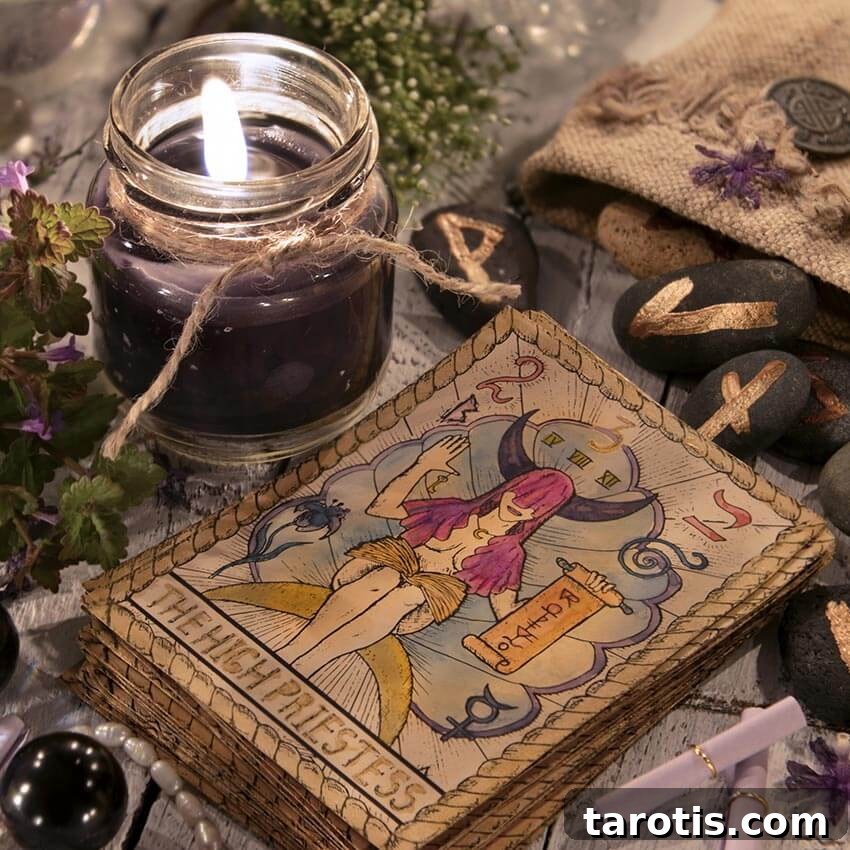
Interest in tarot and tarot card meanings has been rising as these mysterious arts move into the mainstream. Before getting a tarot reading, it helps to understand what tarot can offer and how it can support your personal growth. Learning tarot is like learning a new language—challenging at first, but ultimately rewarding and accessible.
A tarot reading can be deeply transformative. A skilled reader can reflect back insights about your feelings and hidden patterns, which can feel intimate and surprising. Even more empowering is learning the meanings of the cards yourself and developing an ongoing relationship with the deck. That relationship can help bridge the gap between your conscious thoughts and deeper intuition, giving you a reliable tool for guidance and perspective.
Tarot supports greater responsibility for our actions and intentions. It helps unlock intuition so you can choose actions aligned with your heart’s desires, notice when you’ve strayed off course, and reconnect with spiritual guidance when you feel lost.
Tarot Readings are Fun & Helpful, But What Do The Cards Mean?
Tarot cards use color, symbol, and archetype to access deeper layers of awareness. Each card holds imagery designed to evoke emotions and insights that speak a universal language of the soul. The images open a dialogue between your conscious mind and your inner self, allowing you to interpret messages that promote healing and clarity.
There are 78 cards in a traditional tarot deck, each pointing to different strengths, challenges, or lessons. Cards can expose limiting fears or awaken your intuition, showing where you are wise and where you might benefit from greater discipline, love, or awareness.
Before We Get To The Meanings, Do You Know The Difference Between Major Arcana & Minor (Lesser) Arcana?
Major arcana cards signal major life shifts and turning points—new ways of thinking, career or relationship changes, or spiritual awakenings. They highlight significant moments that shape your path and often demand a higher level of presence and integration.
Minor arcana cards reflect day-to-day energies and momentum. They reveal the habits, emotions, and choices that create the arc of your past, present, and future. The minor arcana’s four suits represent core areas of life—communication and thought, material concerns, creativity, and emotions—so they help you align everyday actions with your larger intentions.
Major Arcana
The major arcana maps the hero’s journey from the Fool to the World. These cards reflect big lessons and soul development that are emotionally resonant across different life paths. They guide us in balancing inner masculine and feminine energies while navigating the physical world.
Minor (Lesser) Arcana
The four suits correspond to the classical elements and life areas:
- Pentacles (Earth): Practical matters, money, work, and material security.
- Swords (Air): Thoughts, communication, conflict, and the power of words—often linked to fears and mental patterns.
- Wands (Fire): Creativity, initiative, passion, and the energy to begin or sustain projects.
- Cups (Water): Emotions, relationships, intuition, and emotional energy.
What Does It Mean to Draw a Major Arcana?
Drawing a major arcana card points to a meaningful shift or a new level of awareness in your life. These cards usually mark memorable events that shape your path and offer clear lessons. Their significance is amplified by their placement in a spread: a major card in the future position indicates projected energy and potential, while one in the past position reveals experiences that still influence your present.
List of All Major Arcana Cards, Their Meanings, & How to Interpret Them
The Fool
The Fool marks the start of a journey—an openness to possibility, willingness to take risks, and a trust that you’ll learn along the way. It celebrates enthusiasm and the readiness to explore the unknown.
The Magician
The Magician signals your ability to harness creativity, words, emotion, and focus to manifest outcomes. It also reminds you to use your power ethically, as energy tends to return to its source.
The High Priestess
The High Priestess points to hidden knowledge and inner wisdom. She represents intuition, spiritual insight, and the calm that comes from tuning into a higher perspective beyond everyday drama.
The Empress
The Empress symbolizes fertility, creativity, and nurturing energy. Whether birthing a project, relationship, or idea, this card highlights the power of emotional creativity and the divine feminine.
The Emperor
The Emperor reflects structure, discipline, and authority. It can encourage practical organization to achieve goals while reminding you not to rely solely on logic at the expense of passion and spirit.
The Hierophant
The Hierophant points to established systems, mentorship, tradition, or organized learning. It can suggest joining a community of knowledge or examining how traditional structures influence your thinking.
The Lovers
The Lovers indicate unity, choice, and often romantic or deeply meaningful partnerships. This card speaks to harmony between masculine and feminine energies and making decisions aligned with values and desire.
The Chariot
The Chariot represents focus, determination, and the ability to cut through illusion by trusting your intuition. It signals victory achieved through clarity and inner strength.
Strength
Strength shows gentle power—taming inner turmoil and responding with compassion and calm. It reflects maturity and the ability to lead through kindness as well as resolve.
The Hermit
The Hermit calls for introspection, study, and withdrawal to integrate wisdom. Solitude can be restorative and reveal deeper truths to share when you return to the world.
Wheel of Fortune
The Wheel of Fortune heralds significant change and shifting luck. It often signals an important turning point already in motion, inviting trust in the unfolding process.
Justice
Justice emphasizes accountability and balance. It reflects consequences that match prior actions and encourages ethical reflection and fair decision-making.
The Hanged Man
The Hanged Man suggests a period of suspension that brings new perspective. By surrendering old patterns, you gain wisdom and a different way of seeing challenges.
Death
Death signifies endings that make space for rebirth. It represents psychological release and transformation rather than literal death—an essential step in growth.
Temperance
Temperance invites blending, moderation, and harmony. It encourages patience, integration of diverse viewpoints, and acceptance of different parts of yourself and others.
The Devil
The Devil highlights bondage to unhealthy patterns—addictions, toxic relationships, or limiting beliefs. Recognizing these chains is the first step to reclaiming freedom and well-being.
The Tower
The Tower marks sudden upheaval that clears away false structures. Though disruptive, it paves the way for greater authenticity and new opportunities.
The Star
The Star offers hope, spiritual renewal, and alignment with vision. It signifies a peaceful, inspired state in which your intuition and creativity flow.
The Moon
The Moon relates to intuition, sensitivity, and fertile inner life. It encourages listening to emotions and trusting subtle messages from the subconscious.
The Sun
The Sun represents vitality, success, and clarity. It indicates a time when things fall into place and confidence and optimism bring tangible results.
Judgement
Judgement signals a calling—a sense of purpose or awakening that urges you to align with meaningful service and transformation.
The World
The World marks completion and integration. It reflects a balanced, skilled state of being where lessons have been learned and you’re ready to expand into a new chapter.
Should You Read Your Card Upright or Reversed? What’s the Difference?
Each tarot card contains both light and shadow aspects. Reversals—cards that appear upside down—can highlight areas where negative patterns or blocked energy need attention. Working with shadow material is a key part of growth, helping you avoid blaming others and instead transmute limiting tendencies within yourself.
Upright Tarot Card Reading
Reading a card upright generally emphasizes its positive, surface-level meaning. Some readers prefer to keep readings simpler by focusing only on upright meanings, using intuition to determine emphasis.
Reversed Tarot Card Reading
Reversed cards can point to inner blocks, inverted intentions, or areas needing healing. While reversals can feel challenging, they often reveal triggers and woundings that, once addressed, allow greater freedom and light in your life.
How to Decide Which Way to Read The Cards:
Begin by learning upright meanings. As you become more comfortable, you can introduce reversals if they add depth and insight. If reversals create unnecessary negativity for you, it’s fine to omit them—tarot is a personal practice and should serve your growth.
Conclusion
Like astrology, learning tarot takes time and unfolds in layers. Approach it with curiosity and playfulness, and trust that daily practice strengthens your connection to intuition and spiritual gifts. Tarot isn’t about dark forces; it’s a tool to refine your energy and support purposeful living.
Remember that the future is a projection of current energy, not fixed fate. Use the cards to cultivate positive energy and align your actions for the best possible outcomes. With an open heart and steady practice, tarot can help you become a clearer, more empowered version of yourself.