
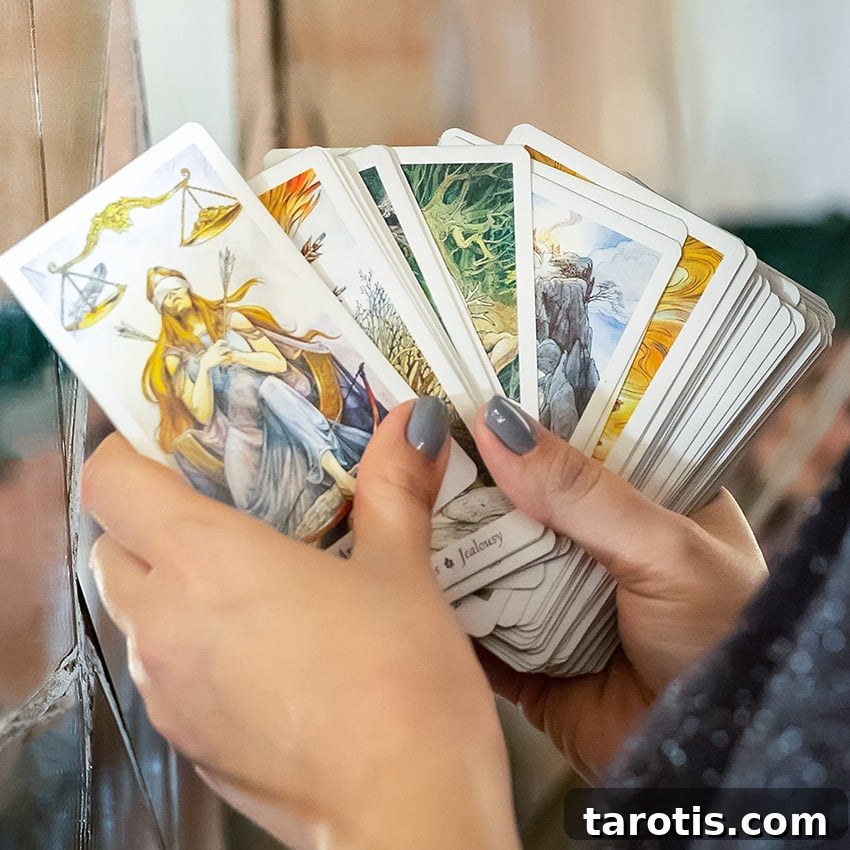
The Tarot Court Cards are often seen as some of the most challenging cards in the deck to interpret. This difficulty usually arises because Court Cards can represent a person, an aspect of energy, or an unfolding situation. As a result, they often demand a more intuitive approach than other cards in a reading.
Fortunately, there are clear frameworks and practical ways to understand Court Cards more confidently—almost as if you were getting to know people in your life. Read on for guidance that makes these cards easier to read and integrate into your practice.
What are the Court Cards in Tarot?
Court Cards belong to the Minor Arcana and consist of any card that depicts a human figure. In most traditional Tarot decks, the Court Cards are the Kings, Queens, Knights, and Pages—members of a royal “court,” which is where the name comes from.
The Difference Between Kings, Queens, Knights & Pages
A useful way to approach the Court Cards is to imagine them as members of a family unit, each playing a distinct role. Visualizing them working together—say, building a house—helps clarify how their qualities differ and interact.
The King represents mastery and external initiative. He has command of his element and takes decisive action. If the family decides to build a house, the King will design the plan, estimate costs, assign roles, and lead the project. His energy is outward and project-driven: he gets things moving.
The Queen represents internal strength and stewardship. While she shares the King’s authority, her power is applied inwardly—managing the home, caring for the family’s daily needs, maintaining the environment. If their child is upset, the Queen comforts and heals, whereas the King takes action to resolve the cause. The Queen’s focus is maintenance, support, and the subtle, sustaining aspects of life.
For example, the King and Queen of Pentacles illustrate this dynamic in the realm of material life. The King of Pentacles is outwardly focused on building and protecting wealth—an empire-builder who ensures security. The Queen of Pentacles tends to the inner life of that empire: the household, health, and the comforts that make life livable and nurturing.
The Knight is the active messenger and adventurer. Knights are the youthful, mobile force—they fetch resources, recruit helpers, and take practical steps in the world. The Knight is energetic but not yet fully mature; he acts without the King’s seasoned discretion. In relationship readings, a Knight of Wands might be a charismatic, impulsive romantic, while the King of Wands is a more settled, committed leader.
The Page embodies curiosity and learning. Pages are the beginners who watch, absorb, and carry messages. They are still developing their gifts and can be naive or blunt in their expression. A Page of Swords, for instance, is eager to use intellectual skills but lacks the King of Swords’ restraint and diplomacy. Over time and experience, a Page’s raw talents may mature into the steady mastery seen in a King.
Do Court Cards Represent People or Situations?
One of the most common questions about Court Cards is whether they indicate specific people or broader circumstances. The answer depends on context, intuition, and the surrounding cards in the spread.
Pages and Knights can frequently symbolize messages, messengers, or transitional phases, while Kings and Queens may describe established energies or situations encompassing those qualities. To determine which interpretation fits, consider whether the card reflects someone you know, or whether it points to an energy you are moving into or need to adopt.
Historical reading systems once assigned narrow physical descriptions to Court Cards, but those conventions are less helpful today. Instead of rigid profiles, focus on the role the card’s energy plays in the querent’s life.
For instance, the Knight of Cups can appear in three primary ways: as advice to embody his qualities (creative, romantic, imaginative), as an incoming situation that requires sensitivity or inspiration, or as a person who brings romance or artistic encouragement into your life. Context and intuition reveal which of these is most relevant.
Concluding Thoughts…
Reading Court Cards successfully blends knowledge of their traditional meanings with intuitive insight. Don’t be intimidated by them—Courts can represent people, energies, or situations, and your task as a reader is to discern which interpretation fits the spread and the question at hand.
Use the distinctions between King, Queen, Knight, and Page to clarify how each card functions and relate their qualities to the surrounding cards. With practice, the Court Cards will feel less like an obstacle and more like familiar personalities you can call on for nuance and depth in your readings.