
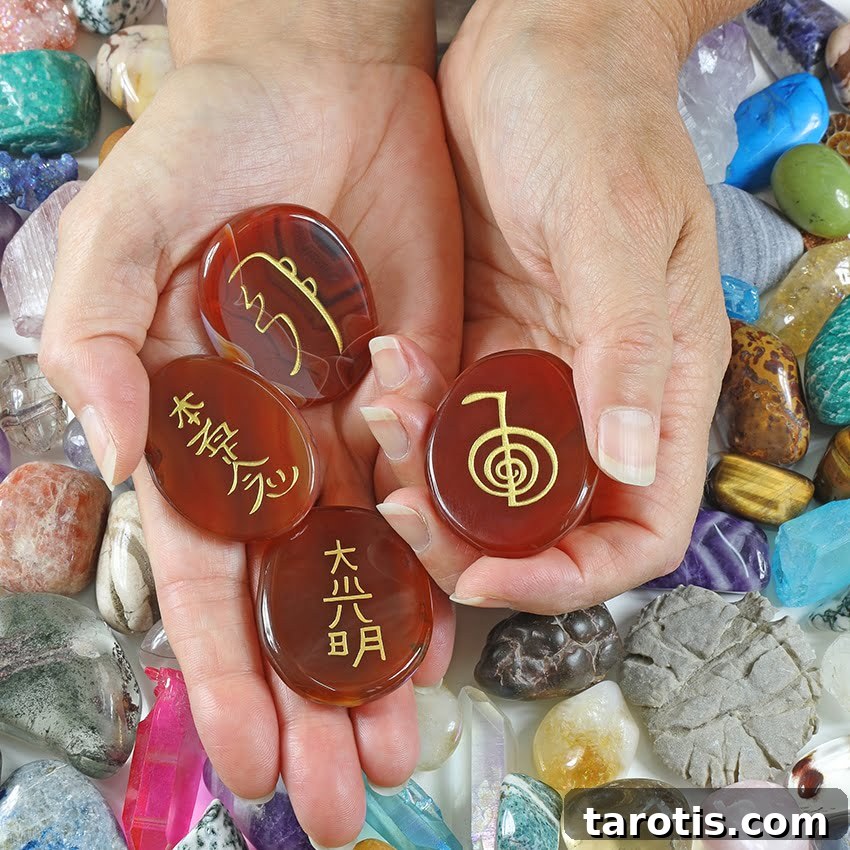
Traditionally, Reiki symbols were taught directly from master to student during attunement. With the rise of the internet, however, the five main Reiki symbols have become widely accessible.
These symbols invite a spiritual way of perceiving and working with life-force energy. When used consciously, they help channel healing energy through the body and direct it outward to others. Below we outline the five primary Reiki symbols, their typical uses, and how they support energetic and emotional healing. Keep in mind that working with Reiki energy develops over time; using these symbols responsibly and under guidance from an experienced practitioner is recommended to avoid energetic overload.
Here are the five Reiki symbols and their common applications.
Cho Ku Rei: Power
Cho Ku Rei is commonly introduced at the second level of Reiki training. It functions as an energy amplifier or a valve, used to increase or decrease the flow of energy. For example, if a chakra is underactive, Cho Ku Rei can be used to direct additional energy into it; if there is a blockage, the symbol can help clear it. The symbol is typically drawn as a spiral with a penetrating line and is used for protection, sealing energy, or boosting vitality.
Practical uses include providing an energetic boost during a low-energy day, supporting physical healing, removing negative energy, or intensifying focus on a particular area of life or body function. The symbol is versatile and safe to use for many purposes related to amplifying or reducing energetic presence.
Hon Sha Ze Sho Nen: Distance Healing
Hon Sha Ze Sho Nen is another level-two symbol and is used for distance healing as well as sending Reiki through time—into the past or future. Though subtle and hard to grasp without experience, it enables practitioners to send harmonizing energy to past traumas, future events, or people who are not physically present. It can assist healing of ancestral wounds, childhood or adult traumas, and energetic imprints from past lives.
The effectiveness of this symbol relies on intention and trust: the practitioner sends energy with the intention that it reach and harmonize what needs healing. The shifts it creates are often subtle, supporting gradual transformation and increased alignment with well-being.
Sei Hei Ki: Mental and Emotional Healing
Sei Hei Ki is used primarily for emotional and mental balance. It supports harmony between the logical and intuitive aspects of the mind, helping to align the two hemispheres and balance yin and yang qualities. This makes it useful for enhancing creativity, intuition, and clarity when thought patterns are imbalanced.
Common applications include supporting emotional stability, reducing addictive tendencies, clearing negative thought patterns, and helping empaths or sensitive people avoid energetic exhaustion. By directing subconscious processes toward healing intentions, Sei Hei Ki helps cultivate mental clarity and emotional resilience.
Dai Ko Myo: The Master Symbol
Dai Ko Myo is considered the master symbol and is associated with the highest level of attunement. It is often described as encompassing the energies of earlier symbols and helping the practitioner move beyond dualistic thinking. Dai Ko Myo is regarded as a powerful tool for deep spiritual healing and soul-level transformation.
Practitioners use this symbol to support profound shifts in consciousness, foster spiritual insight, and cultivate a deeper sense of connection and universal love. Its effects are typically experienced as subtle, expansive, and transformative rather than immediate or dramatic.
Raku: Completion
Raku is commonly introduced at the master level and is associated with grounding and integration. In many lineages it is used to help ground energy after attunements or intense energetic work, and to assist in clearing and aligning the chakras. While not universally considered part of the original Usui system in all traditions, Raku remains a valued symbol for completion and stabilization.
Use of Raku supports integrating awakened energy into daily life and helps anchor subtle shifts so they can be lived sustainably. It assists practitioners in moving from heightened energetic experience into practical, embodied balance.
Closing Thoughts
Reiki symbols are tools that direct intention and energy. They can be drawn, visualized, traced in the air, or mentally intoned to activate their effects. Many practitioners also place drawn symbols in a room to raise the vibrational tone of the space.
Ultimately, intention is the core element when working with Reiki. Thought carries an energetic frequency that can transcend conventional boundaries of time and space, so it’s important to use these symbols with clear, compassionate purpose. Reiki is intended for healing and support, not control or manipulation, and working with a trained practitioner ensures safe, grounded practice.