
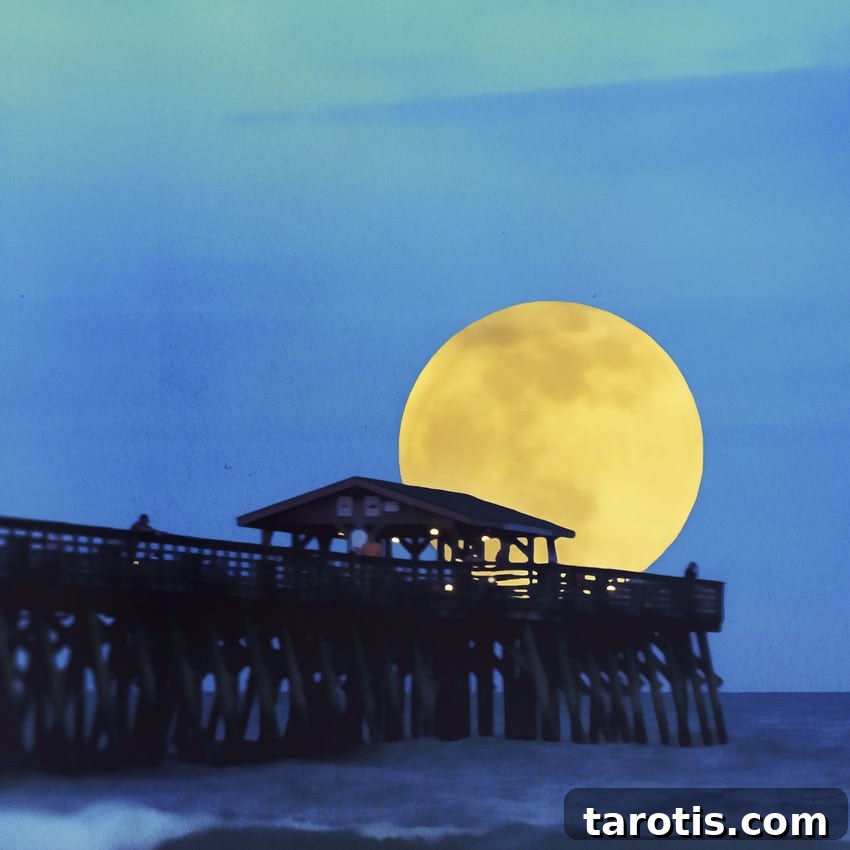
Supermoons have become a frequent topic in astrology and popular media in recent years. It seems each season brings talk of a “super” moon with special powers or extraordinary effects. But how much of that is hype, and what’s actually notable about November’s supermoon?
Related Article: Make Your Moon Wishes Come True
What Is a Supermoon?
To understand the phenomenon, it helps to know what a supermoon really is. The moon follows an elliptical orbit, so its distance from Earth varies. The point at which the moon is closest to Earth is called perigee (generally less than about 223,694 miles). When the moon is either new or full at or near perigee, observers call it a supermoon.
Even though November’s moon may be the closest we’ve seen since 1948, its gravitational influence on Earth will not produce the dramatic effects some sources predict. The main observable differences are size and brightness. At perigee the moon can appear roughly 7% larger than average, influenced both by its closer distance and atmospheric effects.
Claims that the moon will look 15% larger are usually comparisons against a “micromoon,” which occurs when the full moon is near apogee (the farthest point from Earth, often over 248,548 miles). To the naked eye you’re unlikely to spot a dramatic size change unless you can compare photographs taken at different lunar distances. Brightness can vary more noticeably; increases up to 30% are sometimes cited, though a 12–15% change is a more common and realistic expectation.
Because visual differences are subtle, casual observers may find it hard to judge size without reference photos. What makes this particular supermoon notable is that it is the closest the moon will be to Earth until 2034, making it the largest and brightest full moon in nearly 70 years. Coincidentally, a meteor shower occurs near the same time; while that’s a bonus for skywatchers, the bright supermoon can reduce the visibility of fainter meteors.
Supermoon Astrological Forecast
Beyond astronomy, many people consider astrological meanings. In astrology, this full moon in Aries reaches peak fullness at 1:51 pm GMT and triggers a void of course (VoC) period lasting nearly 12 hours. A VoC suggests that initiating major actions during that window may lead to stalled progress, so rather than pushing forward, it’s wise to pause and reflect. The Aries full moon can raise enthusiasm and strong emotion, but the VoC encourages planning and careful consideration rather than immediate action.
When the VoC ends and the moon moves into Gemini, expect a shift toward social interaction, intellectual pursuits, and increased mental activity. Gemini energy favors communication, brainstorming, and exchanging ideas. It also relates to hands and short trips, so hands-on projects and collaborative planning can be productive. Be mindful not to spread yourself too thin—starting many projects at once risks losing focus before completion.
Overall, this transit is better suited to thinking, planning, and sharing ideas than to launching long-term initiatives.
Avoid the ‘Supermoon’ Hype, and Enjoy the View!
As with other celestial events, some commentary will exaggerate the implications of a supermoon. Keep perspective:
- Yes — supermoons occur when the moon is closer to Earth and can appear slightly larger and brighter.
- No — you should not expect sweeping physical or atmospheric changes simply because of a supermoon.
If you follow lunar rhythms and have rituals tied to the moon, continue them as you normally would. This supermoon is special astronomically, but it’s unlikely to cause major, world-altering events. If you miss this one, another supermoon will follow in December, though it may not set the same distance record. Above all, enjoy the natural spectacle and take the chance—weather permitting—to appreciate the view and reflect on your plans as the lunar cycle unfolds.