
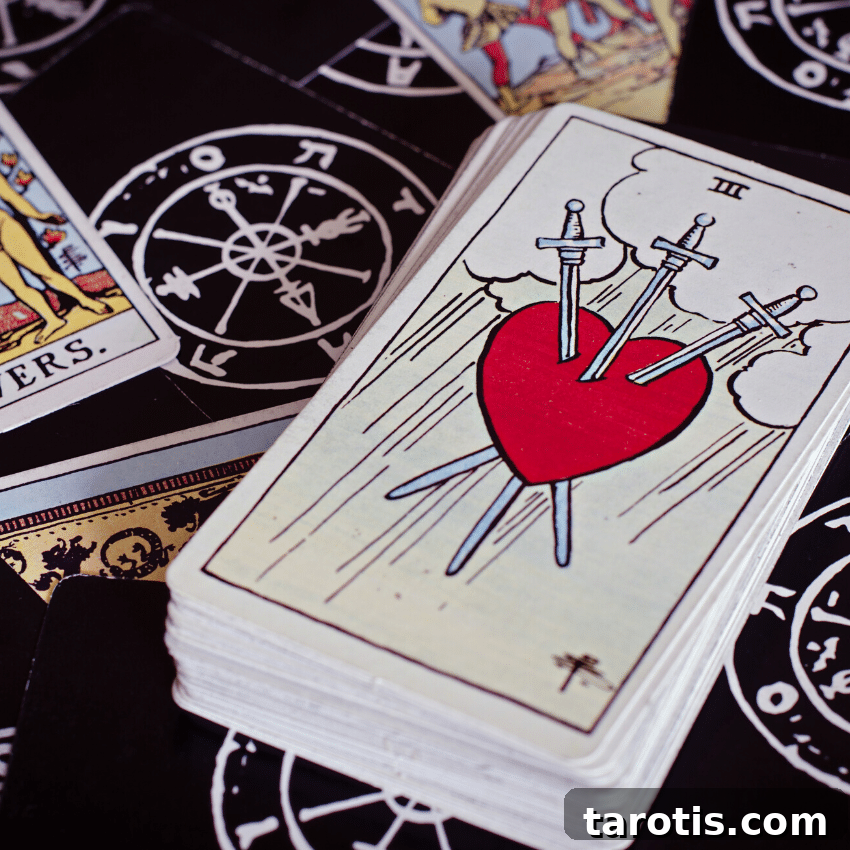
Linked to the element of Air and the realm of the mind, the suit of Swords in Tarot is often met with apprehension or misunderstanding.
Many Sword cards bring intense, challenging, or emotionally sharp messages that prompt us to examine our thinking, face difficult decisions, or step back from desires that no longer serve us. Yet when approached thoughtfully, this suit offers clarity, mental strength, and opportunities to understand both the world and our inner thought patterns more honestly.
Approach these cards with an open mind, and the Swords may become a valuable ally rather than a suit to avoid.
Swords Basics
The suit of Swords is one of the four suits in the Minor Arcana and contains numbered cards from Ace through Ten plus four court cards. As an Air suit, it corresponds with the zodiac signs Gemini, Libra, and Aquarius.
Each Minor Arcana suit maps to a different aspect of human experience.
Swords represent the mind—how we perceive, analyze, communicate, and solve problems—while Cups relate to emotion, Pentacles to the material and body, and Wands to inspiration and spirit. The Swords illuminate how we gather information, form beliefs, and interact intellectually with our surroundings.
Beyond intellect, the suit of Swords is associated with truth, clarity, communication, knowledge, logic, collaboration, and the pursuit of understanding.
Like the Air element itself, this suit emphasizes rational thought, curiosity, rapid change, collective reasoning, and practical solutions. Moving through the Swords we often trace an idea from initial insight to growth, examine how to channel momentum constructively, and confront ways our minds may distort reality or cling to limited viewpoints.
When interpreting Swords, consider how the querent’s mindset shapes the situation:
- What assumptions or biases influence this view?
- Are there mental patterns or traps keeping someone stuck?
- How might they broaden their perspective to discover new truths?
The numbered cards (pips) illustrate different facets of mental energy—from the need for rest and mental boundaries to moving past harmful ideas or recognizing self-imposed obstacles. The court cards depict people learning to embody Swords’ energy: the Page as a curious beginner, the Knight as an active but sometimes impulsive force, the Queen as an internal master who guides through discernment, and the King as an external authority applying logic and judgment.
Court cards can represent the querent, someone in their life, or advice on how to channel Swords energy effectively.
The Suit of Swords Tarot Card Descriptions
Below are concise interpretations of each of the fourteen Swords cards. Use these as a starting point and combine them with your intuition and further study to develop deeper meaning.
Ace of Swords
Ace of Swords: A sudden insight, a decisive truth or idea that shifts perspective. Mental clarity, a fresh intellectual beginning, or the breakthrough potential of Air.
2 of Swords
2 of Swords: A stalemate or difficult decision. Feeling stuck, indecisive, or unwilling to face a choice—an invitation to weigh options and take action.
3 of Swords
3 of Swords: Painful truths or heartbreak that reveal themselves. Emotional wounds connected to harsh words, ruptured trust, or disappointing realizations.
4 of Swords
4 of Swords: A need for rest and mental boundaries. Recovery, reflection, and stepping back to restore clarity and strength.
5 of Swords
5 of Swords: Pyrrhic victories or contentious conflict. Winning at the expense of relationships or ethical considerations—an opportunity to reassess priorities.
6 of Swords
6 of Swords: Transition and moving away from difficulty. Travel, emotional or mental adjustment, and gradual healing as you head toward calmer waters.
Read this article next: Can Tarot Cards Be Wrong?
7 of Swords
7 of Swords: Secrets, missing information, or stealthy behavior. Uncertainty, guardedness, and a reminder to verify facts before acting.
8 of Swords
8 of Swords: Mental entrapment and perceived helplessness. Feeling constrained by negative thinking or refusing to explore alternatives—an urge to reclaim personal agency.
9 of Swords
9 of Swords: Anxiety, sleeplessness, and catastrophic thoughts. When worry spirals, it signals the need for action, support, or a reframing of perspective.
10 of Swords
10 of Swords: Rock bottom and the collapse of old narratives. A painful ending that, once acknowledged, creates space for recovery and rebuilding.
Page of Swords
Page of Swords: A curious beginner of Air—eager, perceptive, and ready to explore ideas. Represents learning, youthful inquisitiveness, and mental agility.
Knight of Swords
Knight of Swords: Bold, fast-moving intellectual energy. Determined and incisive but sometimes impatient or overly dogmatic; an urge to balance speed with wisdom.
Queen of Swords
Queen of Swords: Clear-sighted, discerning, and honest. She sets boundaries, speaks truth, and models emotional independence through rational insight.
King of Swords
King of Swords: An authoritative thinker who judges fairly and makes sound decisions. Strategic, principled, and able to see multiple sides of an issue while maintaining firm leadership.
Working With the Suit of Swords
Working with Swords can feel intense because these cards often expose real and serious mental or communicative challenges. Still, the mind is a central part of our identity, and the Swords invite honest assessment of where our thinking might be limiting growth or compounding fear.
Study these cards and reflect on how their messages can clarify thinking, encourage constructive change, and guide better choices rather than simply triggering anxiety.
Which Swords cards make you uncomfortable, and why? When have Swords revealed a useful truth or helped you break a mental pattern? Consider how readings that include Swords can prompt reexamination of assumptions and support more honest decisions.
Related article: A Tarot Card Spread for Quick & Easy Insight