
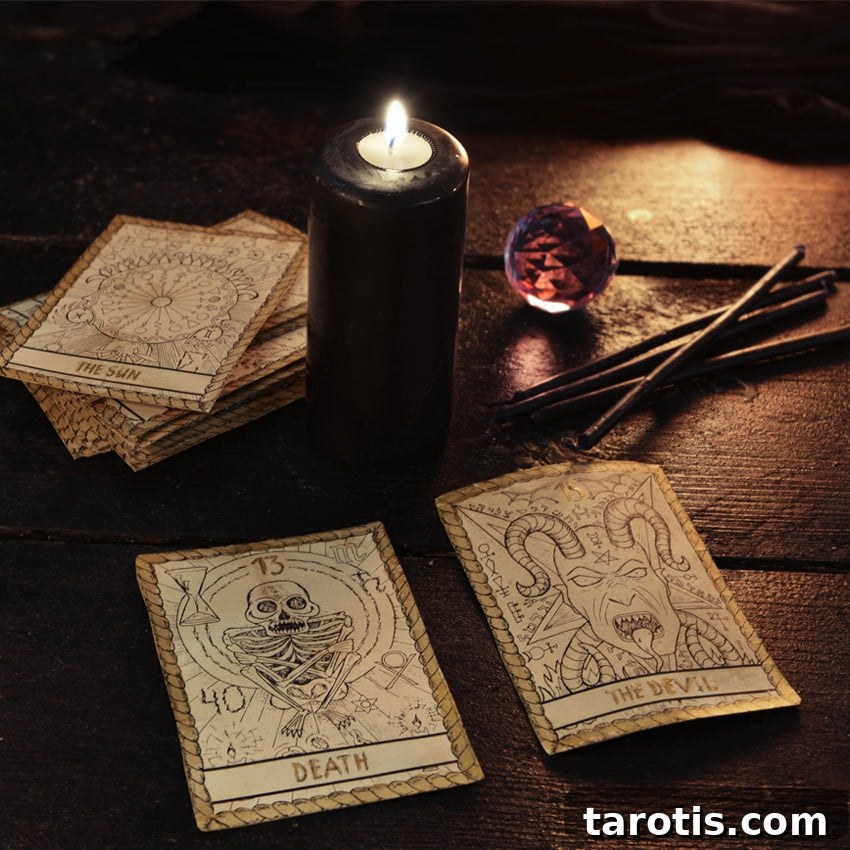
Tarot card meanings can offer deeper insight than many people expect. Often we need an answer at inconvenient moments—3 a.m. with work worries, midnight after an argument, or midday while someone important is half a world away. In those moments, daily horoscopes can help, but the Tarot often delivers more immediate clarity. The core is learning how to read Tarot card meanings simply and reliably.
Divination tools won’t replace personal judgment, but they can provide quick guidance when you need a simple yes or no. Below is a straightforward method for getting fast answers from one of the most accessible divination tools: the Tarot. The process is easier than it seems and relies on intuition, symbolism, and a little practice.
Tools You Will Need:
- Your clear question
- One Tarot deck
1. Shuffle
Shuffling sets the stage. The act itself matters less than the intention you bring to it. As you shuffle, focus solely on your question and let the deck absorb that energy. This prepares the cards to reflect the influences at play when you draw.
2. Draw one Tarot card
For quick yes/no guidance, a single-card draw is ideal. After shuffling while holding your question in mind, draw one card any way that feels right to you—cut the deck and take a card from a pile, fan the cards and select one, or take the top card. There’s no wrong method. Trust your personal ritual; these are your cards and your inquiry.
Sometimes a card will leap out or fall when you’re handling the deck. That’s often a meaningful nudge—take it as a sign and read the card you were shown.
3. Follow your instinct when interpreting Tarot card meanings
Intuition is the most powerful tool in Tarot reading. When you look at the card, notice your immediate emotional reaction. A tightening in the stomach or a sense of dread usually indicates a no, while relief or excitement often signals a yes. Your first impression reveals a lot because the Tarot’s core message is felt as much as it is seen.
If your initial response is unclear, look for supporting clues on the card. Symbols, figures, and overall tone can confirm or nuance the intuitive answer. Pay attention to how the card’s imagery resonates with your situation.
4. Use color and imagery as confirmation
Card colors and scenes carry meaning. Dark, muted, or stormy palettes often indicate difficulty, endings, or negative energy. Cards like the Eight of Cups or the Devil typically use somber tones to reflect themes of loss, temptation, or stuck energy. Brighter colors, sunlight, and open landscapes usually suggest positive outcomes, movement, and clarity.
When you’re learning, use colors and prominent symbols to validate your gut reaction. They help ground an intuitive yes or no in the card’s visual language.
5. Recognize clear yes indicators: aces and the Sun
Aces are strong affirmative signs in Tarot. Drawing an upright ace often reads as a clear yes—new beginnings, potential, and an opening of possibilities. The Magician, associated with initiation and power, also commonly points toward a positive outcome depending on context.
Sun imagery is another reliable yes indicator. Even on cards associated with transformation or endings, like Death, the presence of sun motifs can signal renewal or a favorable turn. Cards such as the Ten of Cups or the Sun itself frequently represent positive confirmations.
Ultimately, combine your first instinct with visual cues—color, symbols, and numbers—to arrive at a confident yes or no. Over time, you’ll recognize patterns and build a faster, more accurate reading style.
Concluding thoughts
This simple one-card method is a practical way to begin understanding Tarot card meanings and to receive quick yes/no answers. Trust your intuition, pay attention to color and symbolism, and practice regularly to refine your interpretations.
When you need immediate answers—especially during those late-night moments—you now have a clear, repeatable approach for consulting the Tarot. Keep a deck handy, stay observant of your reactions, and let the cards guide you.