
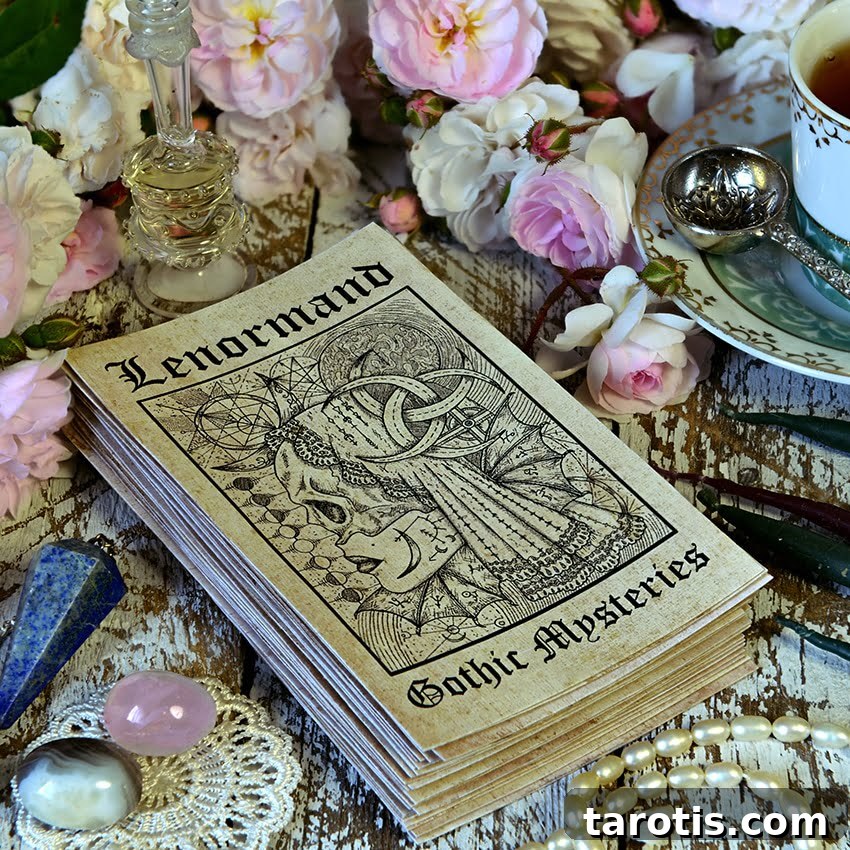
It’s not Tarot and it’s not an oracle deck, but it is an intuition-driven, age-old system used for divination — Lenormand.
If you enjoy Tarot, there’s a good chance you’ll enjoy Lenormand as well, although many people haven’t heard of it. Both systems are longstanding methods for exploring the future, clarifying present circumstances, and uncovering core dynamics, yet Lenormand remains less widely known and is often underrated among card readers.
If you’re curious about learning new card systems or adding another deck to your collection, Lenormand is worth considering. Below we’ll compare Tarot and Lenormand to help you decide which system—or combination of both—might suit you best.
How are Tarot & Lenormand Similar?
While Tarot has an older documented history, both Tarot and Lenormand have been used widely for more than a century and are popular among cartomancers worldwide.
Each system has a defined structure, and studying individual card meanings is important before attempting readings. If you appreciated the process of learning and memorizing Tarot card meanings, you’ll likely enjoy doing the same with Lenormand.
Both systems use spreads and layouts to bring organization to readings. Lenormand readers commonly use smaller spreads of 5–7 cards as well as a full-deck method called the “Grand Tableau,” which employs all 36 cards to map out a person’s life or a complex situation.
How are Tarot & Lenormand Different?
Despite some surface similarities, Tarot and Lenormand differ significantly in structure, emphasis, and reading style.
A traditional Tarot deck usually contains 78 cards divided into the Major and Minor Arcana and four suits, with imagery and symbolism designed to explore archetypal, psychological, and spiritual themes. By contrast, a traditional Lenormand deck has 36 cards. Lenormand cards are presented as individual symbols rather than suit-based or arcana-based categories, and they tend to be read in combinations that produce concrete, situation-focused meanings.
Tarot often seeks to explain the underlying “why” and “how” of a situation: the motivations, emotional landscape, and inner dynamics that shape outcomes. For example, the 9 of Swords frequently points to anxiety, internal struggle, and sleepless worry, highlighting psychological or emotional processes at work.
Lenormand, on the other hand, emphasizes the “what” and the “where” — the events, people, and practical circumstances you can expect to encounter. Cards like the Dog typically point to a friend or loyal companion, while the Birds often represent conversation, gossip, or short exchanges. Lenormand tends to be more literal and event-oriented: it maps actions and external developments rather than diving deeply into motives or inner states.
Tarot or Lenormand: Which Is Right for You?
Choosing between Tarot and Lenormand often comes down to the type of guidance you prefer. They’re not mutually exclusive, and many readers use both systems depending on the question at hand.
Consider these distinctions when deciding:
• If you want clear, concrete information about upcoming events, relationships, or practical matters, Lenormand’s direct, combinational style may suit you better.
• If you prefer to explore psychological dynamics, emotional patterns, and deeper themes—seeking insight into why things unfold the way they do—Tarot’s symbolic and archetypal approach may be the better fit.
Another consideration: if you like step-by-step guidance about choices and inner work, Tarot tends to offer richer material for interpretation and reflection. If you want straightforward, situational answers and timelines, Lenormand often gives concise and action-oriented perspectives.
Keep in Mind
Tarot and Lenormand complement one another rather than compete. If you feel drawn to both, there’s value in studying each system and using them in tandem: Lenormand for specific, event-focused clarity; Tarot for emotional and psychological depth. When buying decks, be aware of these differences so you choose the deck that matches the type of readings you want to do.
If you’re leaning toward Tarot and want to try a simple practice, you might experiment with a short three-card reading to get a feel for the system before committing to a full deck. If you prefer detailed, day-to-day forecasts, try a small Lenormand spread or explore the Grand Tableau when you’re ready for a comprehensive reading.
Related article: How to Read the Aces of the Tarot — Breakthroughs & Beginnings