
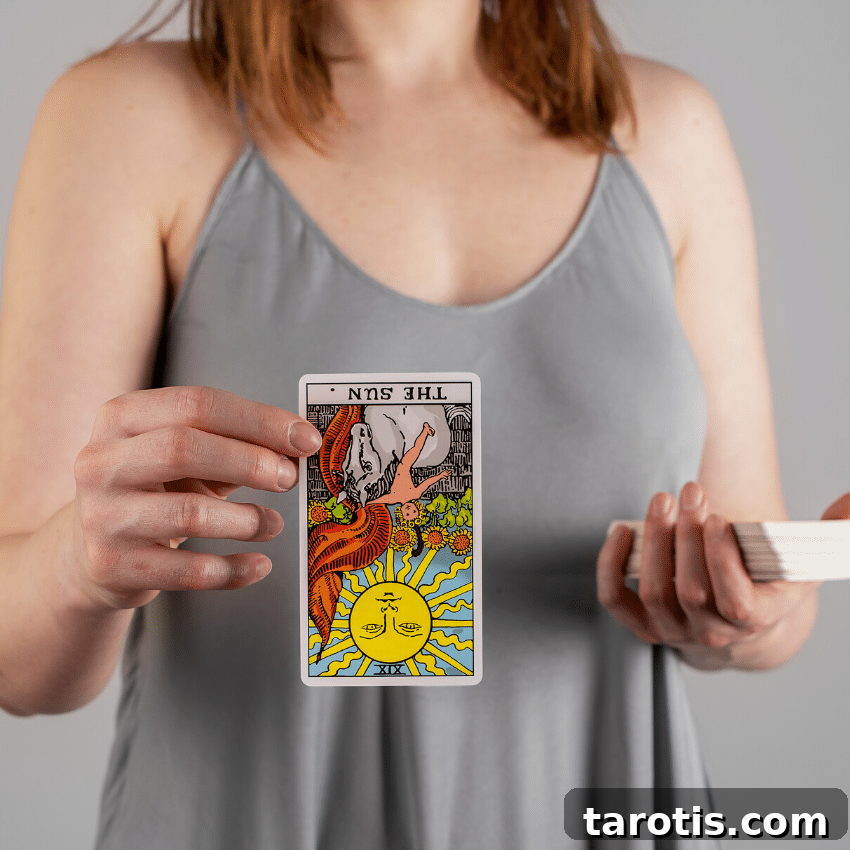
Did you just draw a reversed Tarot card? First things first — don’t panic!
If you’ve been reading Tarot for a while, you know some readers avoid reversed cards entirely. Maybe that’s been your approach. There’s a lot of debate about card placement and whether upright and reversed Tarot cards add complexity, change meanings, or introduce negativity into a spread.
Imagine pulling The World in a reading: it usually signals success, growth, and travel — reasons to celebrate. But if The World appears reversed, many readers interpret it as stagnation, delays, or a setback. That can feel alarming.
Reversed Tarot Cards Aren’t Necessarily Bad
It’s important to remember that reversal does not automatically equal “bad.” Reversed cards carry a range of meanings and nuances.
A common, simple approach is to read the reversal as the opposite of the upright meaning. Each card has keywords that guide interpretation, so flipping those keywords can be one way to understand a reversed card.
Take the Major Arcana card The Chariot, for instance. Upright keywords include:
- Movement
- Determination
- Control
A straightforward reversed reading might indicate:
- Lack of movement
- Lack of determination
- Lack of control
But reversals can mean much more than just the opposite of a card’s upright meaning.
Upright vs. Reversed: What the Cards Show
Tarot cards reflect energies and situations in life. Every situation contains both easy and challenging aspects, and that duality shows up in readings.
If most cards in a spread are upright, the energies are likely flowing smoothly and you’re in control of the situation. If many cards are reversed, the situation may feel out of control and energies are blocked or challenged.
A reversed card often draws attention to itself, signaling an area that needs closer examination. It can reveal what feels upside-down in your life and suggest how to restore balance.
Often a reversal indicates blocked energy: the upright card’s energy is present but obstructed. The goal isn’t to avoid that message but to acknowledge it and work through the obstruction.
The reversed imagery itself can also spark insight. How do you feel when you see an upside-down Strength card, for example? Reversed images can trigger specific impressions that inform interpretation.
Replacing a fear-based view of reversals with one of deeper nuance unlocks richer readings. Think of reversals as offering layered, detailed insight rather than as inherently negative signs.
Are Reversals Necessary?
There’s no single “right” way to read Tarot, so whether to include reversals is a personal choice. Adding reversals can feel intimidating at first, but they expand the range of messages the cards can deliver.
Using reversals effectively doubles the possible meanings: instead of 78 meanings for upright cards alone, including reversals gives you 156 potential interpretations. That increases nuance and depth in a reading.
If you’re new to Tarot, however, 156 meanings can be overwhelming. You may prefer to begin with upright readings and gradually introduce reversals as your confidence grows.
Example: Reversals in a Love Reading
To illustrate how reversals can inform a spread, consider this love question:
- What will my love life be like within the next three months?
You draw three cards:
- The Empress
- The Knight of Cups reversed
- The Moon reversed
Two reversals might seem worrying at first, but looking closer reveals a helpful picture.
The Empress
The Empress represents abundance, attraction, and creative energy. In a love reading she often points to warmth, sensuality, and attention from admirers — possibly a reflection of the querent’s own charisma.
The Knight of Cups, Reversed
Upright, the Knight of Cups suggests a romantic offer from a dreamy, courtly person. Reversed, it can warn that someone’s charm may be superficial: they appear romantic but may avoid commitment or be inconsistent.
The Moon, Reversed
Upright, The Moon evokes mystery, fantasy, and emotional depth. Reversed, it can indicate confusion, hidden motives, or fears emerging into view. In a love context this card can advise caution — things may not be what they seem.
Putting the Pieces Together
Read together, these cards suggest the querent may attract several admirers in the coming months, but one suitor who initially seems ideal could reveal commitment issues or misleading behavior, creating uncertainty. Far from purely negative, the reversals offer a valuable warning and practical guidance: enjoy the attention, but stay observant and protect your heart.
Reversals here add detail that upright cards alone might miss, turning the spread into a more cautious and ultimately protective message.
Give Reversed Cards a Try
If you’ve never worked with reversals, try experimenting. They can deepen your readings and highlight subtleties you might otherwise overlook. With practice, interpreting reversed cards becomes more intuitive.
Remember, there’s no single “right” way to read a reversed card — your intuition and context will guide your interpretation.
Interested in learning more about Tarot? Learn more with yourDaily Tarot Reading!