
Have you ever felt stuck, as if no matter how hard you try you can’t make progress? That sense of being blocked is often a signal: it’s time to clear what’s holding you back. Clearing energetic blockages in your chakras can clarify why you’re stalled—sometimes revealing that the goal isn’t meant for you, or simply opening the channels so progress can flow.
Working with your chakras doesn’t need to be complicated. A simple pendulum can be an effective divination and healing aid to both answer yes-or-no questions and help release blockages. Below is a straightforward, practical guide to using a chakra pendulum to get unstuck.
1. Gather the right tools
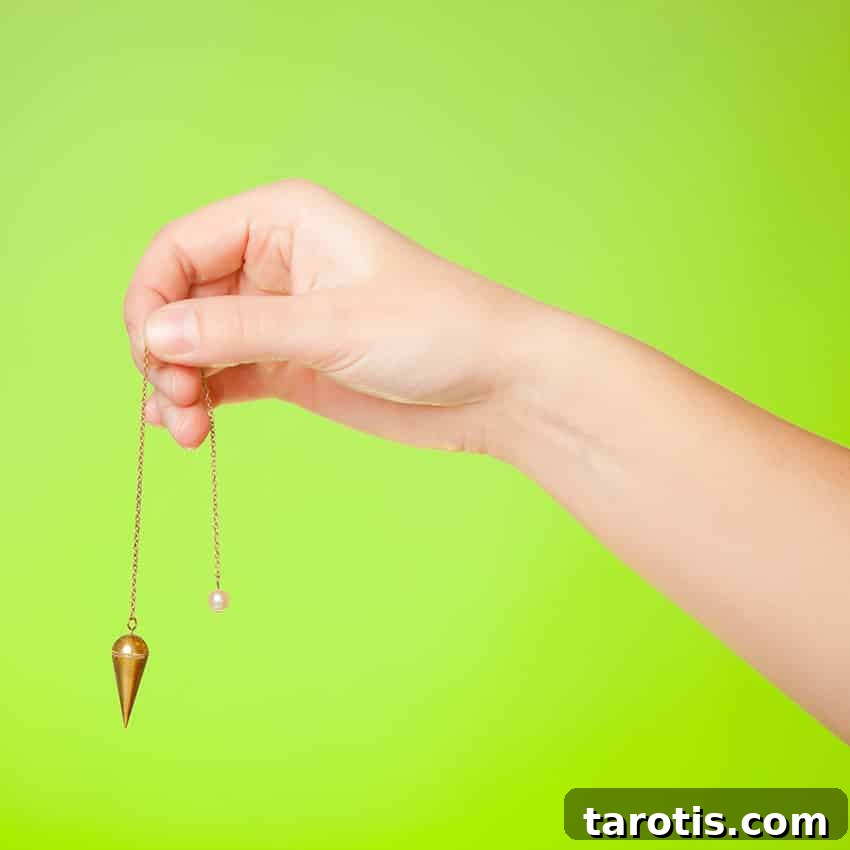
Chakra healing that creates real change can be done quickly when you have the right tool: a pendulum. Pendulums are simple divination instruments used to obtain yes or no answers. They’re especially useful when you’re facing a clear choice—whether to pitch an idea, accept a job, or propose to someone. A chakra pendulum can help clear the energy centers related to your dilemma while offering direct guidance.
2. Calibrate your chakra pendulum
Calibrating a pendulum takes only seconds. Hold the pendulum steady in front of you and ask a question you already know the answer to—“Is my name [your name]?”—to observe the motion it uses for “yes.” Then ask a question with a known “no” answer to observe the opposite or different motion. These movements establish your pendulum’s yes and no responses.
3. Choose which chakras to work on
Decide which chakras relate to your situation. You can focus on a single chakra or work through several. Here’s a quick overview of the main chakras and what they influence, to help you form precise yes-or-no questions:
• Root Chakra (Red): Basic needs—food, shelter, work, survival. Located at the base of the spine.
• Sacral Chakra (Orange): Sexuality, creativity, fertility. Located in the pelvis.
• Solar Plexus Chakra (Yellow): Self-esteem, confidence, personal power. Located above the navel.
• Heart Chakra (Green): Emotions, love, relationships. Located at the center of the chest.
• Throat Chakra (Blue): Communication and expression. Located in the throat.
• Third Eye Chakra (Indigo): Intuition, insight, planning. Located between the eyebrows.
• Crown Chakra (White/Violet): Connection to higher purpose and the divine. Located at the top of the head.
For example, if you’re wondering whether to propose, the heart and throat chakras are most relevant: the heart for love and emotional readiness, and the throat for communication and timing.
4. Relax and focus on your questions
Lie down or sit comfortably and bring attention to the areas you’ll work with. Visualize the color associated with each chakra and breathe into those places. Allow yourself to notice any physical sensations—it’s common to feel warmth, tingling, or subtle shifts as you focus.
5. Ask the pendulum
Hold the pendulum over the chakra you’re addressing and ask clear yes-or-no questions. For the proposal example, you might hold the pendulum over your heart and ask, “Is now the right time to propose?” Then try the same question over the throat chakra to check for readiness to communicate your intention. You can repeat questions on different chakras to gather more information. Treat this as information gathering—ask until you feel you’ve collected enough insight.
6. Meditate to integrate
After you’ve consulted the pendulum, spend a few minutes meditating on the color and location of the chakra you worked with. A short, focused meditation helps integrate any shifts and can bring additional clarity or imagery about next steps. You may receive practical guidance or intuitive impressions—use those impressions as supportive input, not absolute commands.
Concluding thoughts
Astrology, numerology, and other metaphysical tools offer valuable perspectives, but when you need an immediate answer or a way to get unstuck, a chakra pendulum can be a direct, portable option. It can help you identify which energy centers need attention and provide yes-or-no guidance while you clear those blocks. How you use a pendulum and how often will depend on your personal practice—use it as a tool to inform and empower your decisions.