
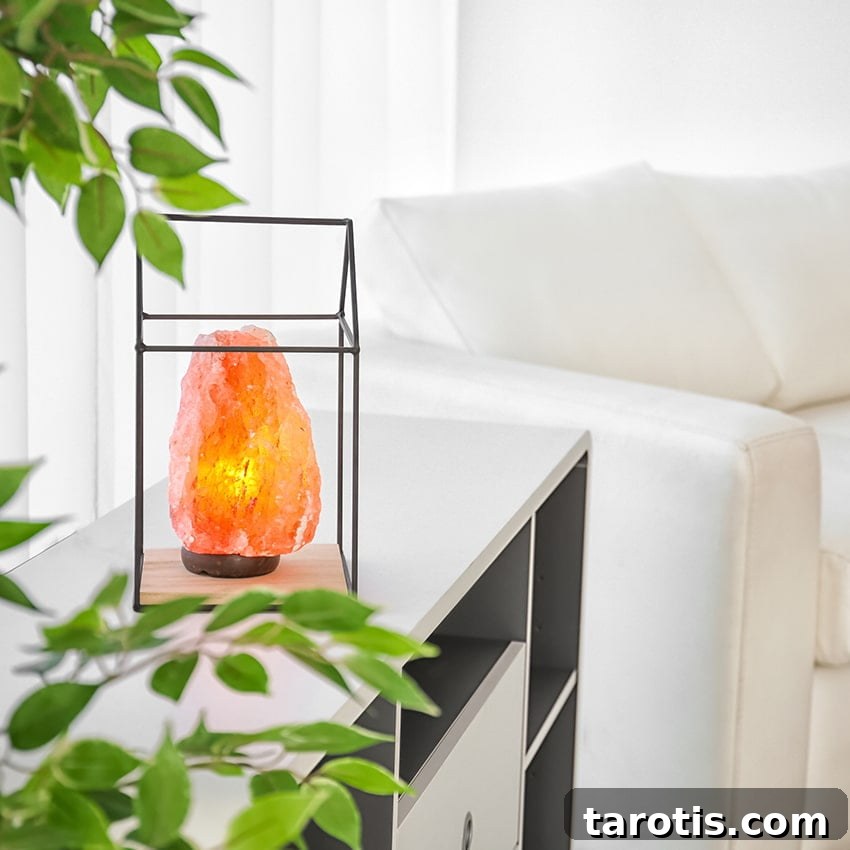
You may have heard the buzz about Himalayan salt lamps and wondered whether they live up to the claims. Are they truly soothing and beneficial, or mostly hype? If you’re considering adding one to your sacred space, the short answer is: they make a lovely and calming addition.
The History of Himalayan Salt Lamps
The story behind the salt used in these lamps is remarkable. The Himalayan mountain range formed over millions of years as tectonic forces acted on the Indo-Australian plate. The rosy salt deposits come from ancient evaporated seas in what is now Pakistan. Over time, heat and geological movement created vast salt beds, leaving deposits that are hundreds of millions of years old.
Himalayan salt shares many of the same elements found in the primordial ocean and, interestingly, in the human body. Minerals such as potassium and magnesium give the salt its characteristic pink hue. While some dismiss the spiritual or therapeutic claims associated with Himalayan salt, its deep geological history and mineral composition are hard to ignore.
How Salt Lamps Work
Himalayan salt is naturally hygroscopic, which means it attracts and holds moisture from the air. This property can help capture airborne particles, including some allergens. When a bulb inside the lamp warms the salt, you might see small beads of condensation or the lamp appearing to “weep”—a normal effect of the heat drying the surface.
Another commonly cited effect is the release of negative ions. In scientific terms, an ion is an atom or molecule with an electrical charge due to a gain or loss of electrons. Negative ions occur naturally in places with abundant air movement, sunlight and water—think waterfalls, sea air or mountain breezes. Many people report feeling refreshed and energized in such environments.
Negative ions can attach to positively charged airborne particles—dust, pollen, or other pollutants—causing them to fall out of the air. Reducing airborne positive ions and pollutants can improve indoor air quality and may help decrease the effects of electromagnetic radiation from electronic devices. Fewer positive ions in your environment is generally associated with increased wellbeing and energy.
Salt Lamps and Your Mood
Exposure to negative ions has been linked in some studies to improved mood and increases in serotonin. Research, including work referenced by major institutions, suggests high exposure to negative ions can have measurable effects on mood and may help with conditions like Seasonal Affective Disorder. Unlike many medications, salt lamps have no pharmacological side effects and are safe for general use.
Negative ions may also enhance oxygen flow to the brain, promoting alertness and focus. Beyond the biochemical effects, the soft, warm glow of a salt lamp contributes to a peaceful atmosphere, which can be calming and supportive of relaxation and meditation.
The Healing Properties of Halite
Himalayan salt is a form of halite, a mineral long associated with purification and cleansing in various traditions. Halite is often used in crystal healing practices for its purported ability to deflect negativity, stabilize emotions, and support mental clarity. Pink halite, in particular, is associated with matters of the heart and emotional healing, helping to reduce feelings of isolation and encouraging a renewed sense of connection and balance.
Beyond Science
Much of the conversation about Himalayan salt lamps centers on negative ions, but their appeal goes further. Whether or not every healing claim is fully proven, these lamps combine geological history, mineral composition and gentle lighting to create an environment that many people find restorative. They are valued both for potential air-quality benefits and for the warm, grounding ambiance they provide.
For anyone seeking a calming element for a meditation area, bedroom, or sacred space, a Himalayan salt lamp can be a meaningful and attractive addition—offering soothing light, a connection to ancient natural processes, and a simple way to enhance the atmosphere.